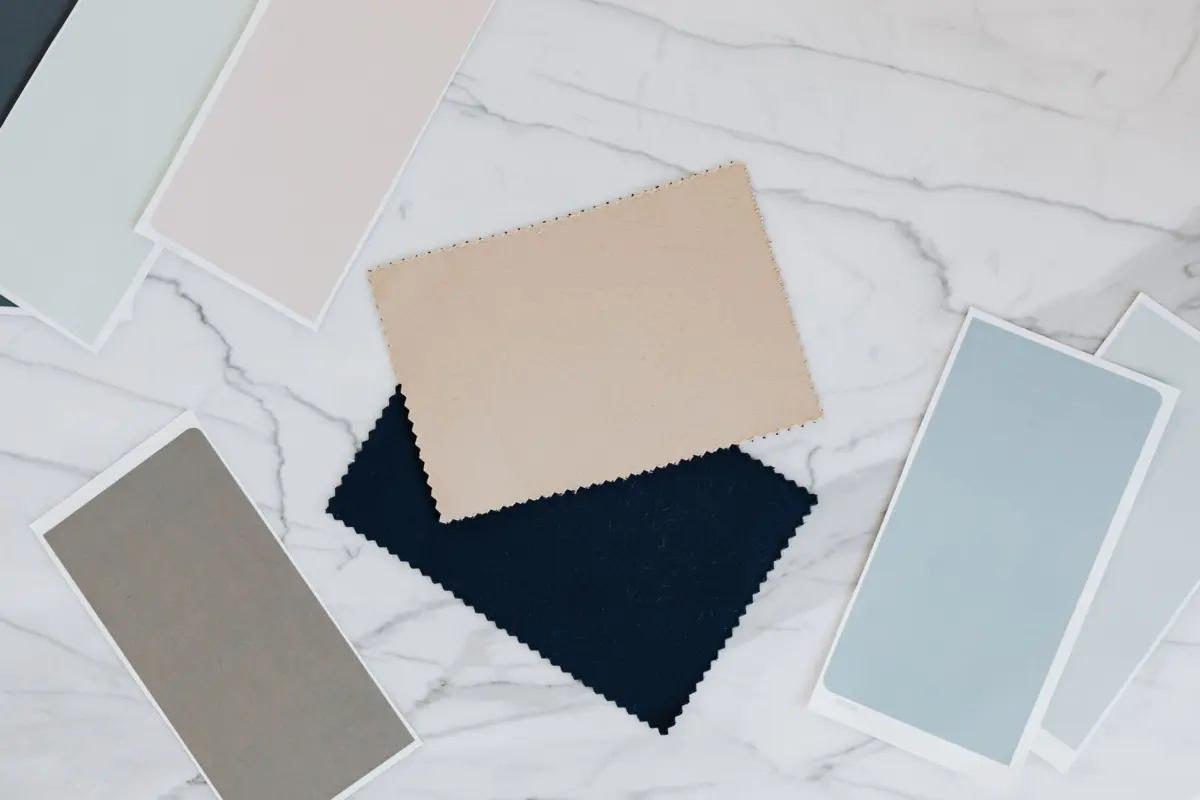
Standing in a showroom with wood, stone and fabric samples? This interior design materials guide gives the short answer: quartz for low-maintenance counters, marble if you accept the care, oak for steady colour, walnut for depth.
Each material below is judged by how it looks in a lit room and how it wears. The sections on quartz vs granite countertops and marble vs quartzite go further on stone, and the metal guides cover iron.
Choose your route through the materials
Most material decisions start from one practical worry rather than from a love of a particular surface. Pick the route that matches yours and read in that order.
- Furnishing a living or dining room: start with the wood section, then upholstery, then the lighting checks near the end. Wood sets the colour of the room and fabric sets how it feels.
- Planning a kitchen or bathroom counter: go straight to stone, then the comparison table, then the care section. The care routine matters as much as the look.
- Buying a sofa or chairs: read upholstery first, then the care section. Fabric choice depends on how much cleaning you will realistically do.
- Adding metal accents or buying iron pieces: read the metals section, which points to the detailed iron and finishing guides.
- Building cabinets or choosing a base material: use the engineered materials section, which leads to the sheet-goods comparison.
Whichever route you take, the same principle applies. A material is not good or bad in isolation. It suits a room, a light source and a level of upkeep, and the sections below tie each choice to those three things.
Wood for furniture: oak and walnut
Oak and walnut are the two woods this guide compares, and the honest answer to which wood is best for furniture is that it depends on the room’s light and your budget rather than on performance. A trade guide from a panel supplier notes that both species have comparable performance as wall panel veneers. That finding concerns panels, not furniture frames, but it points the same way: choose between them on appearance and price first.
How each wood changes with age and light
Oak and walnut age in opposite directions. The same supplier describes oak as darkening slightly with age and UV exposure, deepening from pale honey toward warm amber. Walnut moves the other way and lightens slightly over time as UV exposure reduces its initial dark intensity.
This matters for placement. A walnut table beside a sunny window will soften from its first, very dark tone, so judge it at the shade it will settle into rather than the shade on the showroom floor. An oak piece in the same spot will warm up. If you want a room that looks much the same in several years, keep either wood out of strong direct sun, or accept the shift as part of the character.
How the wood reads under your lamps
Lighting changes the look of both woods, and the effect is stronger on walnut. In warm artificial light of 2700K to 3000K, typical of incandescent or warm LED bulbs, walnut reads as a deep chocolate brown. Under cooler light of 4000K and above, it picks up grey undertones. Oak is described as more lighting-stable, reading consistently across a wider range of colour temperatures.
The practical judgement: if your room has cool-white bulbs or a lot of daylight with a blue cast, oak is the safer choice for a predictable colour. If you use warm bulbs in the evening and want a rich, dark centrepiece, walnut rewards that setting. Changing bulbs later will change how walnut looks, which is a good reason to settle the lighting before you buy a large walnut piece.
Price and movement
Walnut costs more. One vendor figure puts American walnut at typically 15 to 25 percent above natural oak. Treat that as a guide to the premium rather than a fixed rule, since prices vary by supplier and grade. For a large dining table the gap is substantial, so walnut often suits a smaller statement piece such as a side table, headboard or shelf, while oak suits big surfaces and large runs of furniture.
Both woods are solid timber, and a trade guide from a countertop and surfaces specialist explains that solid wood boards typically expand and contract both horizontally and vertically as temperature and humidity rise and fall. Expect small seasonal movement in any solid-wood table or door, and avoid placing it directly against a radiator or an air vent.
For other ways to build furniture, the comparison of plywood vs mdf explains the alternatives to solid timber.
Stone countertops: marble or quartz
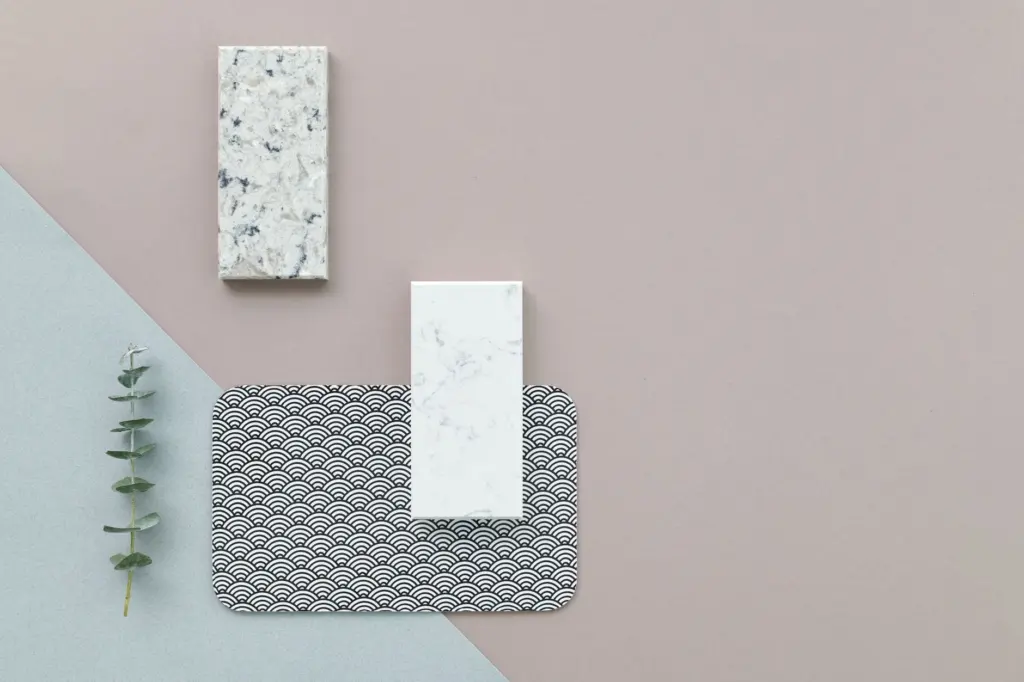
For most working kitchens, quartz is the easier choice, and marble is the one to pick only if you accept careful upkeep. The trade guide from the surfaces specialist describes quartz as durable, easy to clean, hygienic, heat-resistant and nonporous. It also states that quartz used in a countertop is a man-made material that does not need to be sealed.
What marble asks of you
Marble is an all-natural, porous stone that requires sealing, according to the same guide. It is described as very susceptible to stains, scratches or etching after contact with anything acidic, and as one of the most expensive countertop materials that requires a commitment to very careful maintenance. A design guide from a furniture maker adds the other side of the argument: marble is renowned for its timeless beauty and durability and is a classic choice for floors, countertops and accents.
Those two views are compatible. Marble lasts, but it shows a life of use on its surface. Choose it if you like a surface that develops a patina, you will wipe up spills promptly and you can accept marks. Choose something else if you want a counter that looks the same on every day of the week.
Where quartz fits, and where to look at alternatives
Quartz suits busy family kitchens, rental properties and anyone who does not want a sealing routine. Its look is more uniform than natural stone, so hold a large sample against your cabinets rather than judging from a small chip.
If you are weighing it against another hard stone, the guide to quartz vs granite countertops compares them directly. The surfaces specialist’s guide notes that granite is a natural stone that is heat, stain and water resistant when sealed correctly, so granite also carries a sealing duty that quartz avoids. If you love the marble look but dread the maintenance, marble vs quartzite sets out a middle route.
Timber surfaces are a third category, and butcher block countertops pros and cons covers the trade-offs of a wood counter and how to seal it.
Side-by-side comparison of stone and wood
The table puts the four materials discussed so far in one place, so you can compare the look, the wear and the upkeep that each asks of you.
| Material | How it looks in a room | Wear and care | Planning use |
|---|---|---|---|
| Marble | Classic, veined natural stone | Porous; needs sealing; susceptible to stains, scratches and etching from acids | Choose where you accept visible wear; among the most expensive countertop materials |
| Quartz | Man-made, more uniform surface | Nonporous, heat-resistant, easy to clean; no sealing needed | Choose for hard-working kitchens with minimal upkeep |
| Oak | Pale honey, deepening toward warm amber with age and UV | Solid wood moves with humidity and temperature; consistent colour under varied lighting | Choose for large pieces and rooms with mixed or cool lighting |
| Walnut | Deep chocolate-brown in warm light; greyer under 4000K and above | Lightens slightly over time; same wood movement as other solid timber | Choose for accent pieces under warm lamps; typically 15 to 25 percent above natural oak (vendor figure) |
Stone and care points come from the surfaces specialist’s trade guide, and wood colour and price points come from the panel supplier’s comparison.
The table shows a pattern worth acting on. The materials with the most character, marble and walnut, are also the ones that ask for the most attention or the most budget. The calmer choices, quartz and oak, ask less. A good scheme often pairs one demanding material with several forgiving ones, such as a walnut accent in an oak room or a marble splashback above a quartz work surface.
Upholstery fabrics: velvet, leather, silk and linen
No supported ranking names a single longest-lasting upholstery fabric, but leather is the material singled out for durability. The furniture maker’s design guide calls leather a sought-after material in luxury interiors for its durability and sophisticated appearance. If longevity is your first priority, start your search there, and then check the care needs of any specific hide or finish.
Velvet
Velvet’s selling point is how it looks. Its rich texture absorbs light, which adds depth, and that is part of why it is popular in high-end design. In practice this means velvet makes a colour look deeper than the same colour in a flatter weave. Velvet suits a sofa or an armchair you want to be the visual anchor of a room, and it is less suited to a piece whose job is to blend in.
Silk and linen
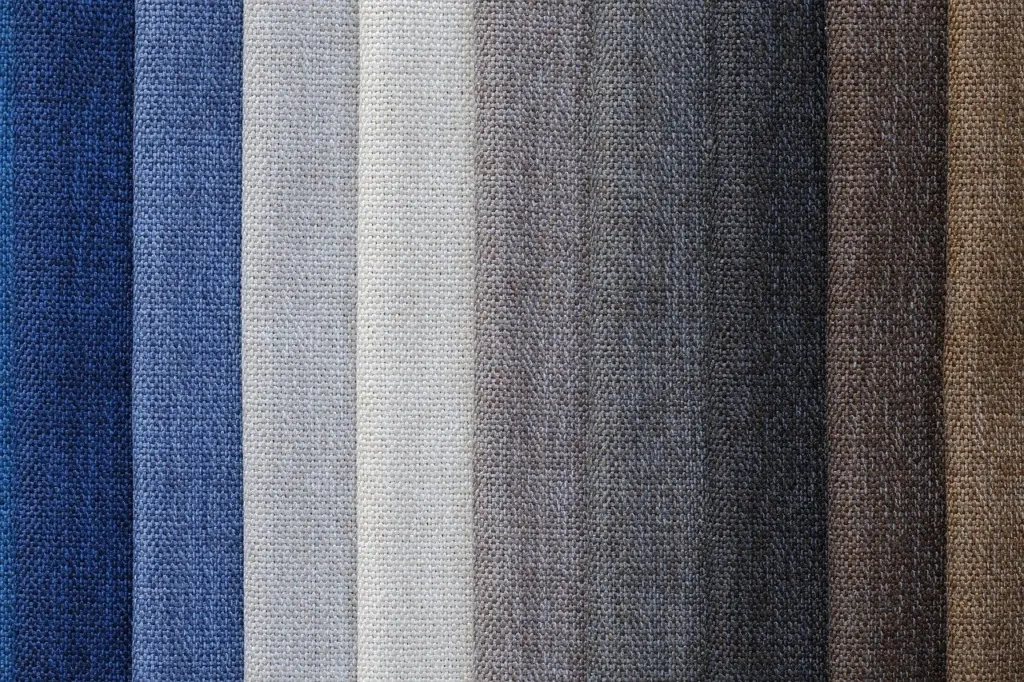
Silk looks refined, but the same design guide notes that it requires careful cleaning to maintain its appearance. That makes it better suited to cushions, curtains and occasional pieces than to a family sofa. Linen is a popular alternative for relaxed rooms, and the swatch image below illustrates the kind of woven texture you should handle before choosing. Always request a physical swatch and look at it in the room where the piece will sit.
Choosing for stains and wear
If household use is hard on fabric, look into treated textiles. The guide to what is performance fabric explains what that label means and what it resists. For window treatments, where the demands differ from seating, the best curtain fabric guide compares linen, cotton, velvet and more.
A sensible approach is to decide the care you will tolerate first. If you will not clean carefully, rule out silk. If you want a rich, light-absorbing look and will accept some upkeep, shortlist velvet. If lifespan is the main goal, begin with leather.
Brass and other metals
Brass is the metal most often used for visible accents such as taps, handles, lamps and frames. The furniture maker’s guide describes brass and similar metals as durable and resistant to tarnishing, which makes them practical for both traditional and modern designs. Brass can be polished to a high shine or finished matte, and that choice changes the mood considerably.
- Polished brass: reflective and formal, and it suits traditional rooms or glamorous accents such as a lamp base.
- Matte brass: softer and more understated, and it suits contemporary schemes where you want warmth without glare.
As with wood, lighting affects metal. Look at the sample under the bulbs you will use, and keep brass finishes consistent within a room so that handles, taps and lighting read as a set.
Iron and finishes
Iron is a different material with different needs. To decide between types, read Cast Iron Vs Wrought Iron: How To Choose The Right Metal For Your Project In 2026, and for the background on the older form, What Is Wrought Iron? History, Uses, And How To Tell It In 2026. For heating, the Cast Iron Radiators: Timeless Heat — The Complete Buyer’s Guide & Maintenance Tips (2026) guide covers what to check when buying, and for bathrooms there is Cast Iron Clawfoot Bathtubs: Timeless Luxury, Buying & Care Guide (2026).
If you like making things yourself, Blacksmithing For Beginners: The Practical Starter Guide To Forging Tools And Projects (2026) is a place to start. Once a piece is in the house, How To Clean Wrought Iron Furniture: Simple, Safe Steps To Restore Shine And Prevent Rust handles routine cleaning, and How To Remove Rust From Metal: 5 Fast, Safe Methods That Work In 2026 helps when rust has already appeared.
Finishing is the other half of a metal piece. Whether to coat a frame or repaint it is the subject of powder coating vs paint, which helps you decide before you commit to a finish.
Engineered and woven materials
Not every piece should be solid timber or natural stone. Engineered wood is a practical alternative, and its main caution is light. The surfaces specialist’s guide notes that engineered wood flooring is susceptible to fading, so a UV finish should be chosen. That is a useful rule for any engineered surface in a bright room: ask what protective finish is on it before you buy.
For cabinets and carcasses, the choice of base material affects what the piece can bear, and plywood vs mdf sets out the differences. For woven furniture, the names are often used loosely, and the explanation of rattan vs wicker helps you read a product label accurately.
Caring for natural materials
Natural materials reward a small, regular routine more than occasional rescue. The right routine depends on the material, and the supported points are these.
- Stone: marble requires sealing and is vulnerable to acid contact, so wipe spills such as citrus or wine promptly. Granite is heat, stain and water resistant only when sealed correctly. Quartz, by contrast, does not need sealing.
- Solid wood: because boards expand and contract with humidity and temperature, keep furniture away from sources of sudden heat and avoid sharp swings in room conditions where you can.
- Light-sensitive finishes: engineered wood is susceptible to fading, so choose a UV finish. Oak and walnut also shift in colour with UV exposure, so rotate or reposition pieces if you want even ageing.
- Silk: it needs careful cleaning to keep its look, so avoid it where spills are likely.
Care is also a purchase criterion. If you read the list and feel reluctant, choose the lower-maintenance option in that category: quartz over marble, a tougher upholstery over silk, a protective finish over a bare one. A material you maintain badly looks worse than a simpler material you maintain well.
Testing samples in your own room
Whatever you shortlist, judge it where it will live. The panel supplier states that screen colour rendering is unreliable for wood, which is a strong reason to order physical samples rather than rely on a website image. The same applies to stone, fabric and metal, since every one of them reads differently under different light.
- Place samples in position: set them where the finished piece will stand, rather than at a window or on a table where the light is not representative.
- Check at different hours: view them in daylight and again under your evening bulbs, because walnut in particular changes between warm and cool light.
- Put samples together: wood, stone, fabric and metal should sit side by side, because colours that look right alone can clash in combination.
- Handle them: touch and test the texture. Velvet, linen and silk differ most in how they feel.
Only after this test should you finalise cost. If the comparison leaves two close options, choose the one with the lower upkeep demand.
Frequently asked questions
| Question | Answer |
|---|---|
| Which wood is best for furniture, oak or walnut? | Neither is clearly better. A panel supplier says both have comparable performance as veneers, so choose by colour and cost. Oak is more stable across lighting, and walnut is typically priced 15 to 25 percent higher according to that vendor. |
| Is marble or quartz better for countertops? | Quartz is easier. It is nonporous, heat-resistant and needs no sealing, while marble is porous, needs sealing and is susceptible to stains and acid etching. Choose marble only if you accept the maintenance. |
| Which upholstery fabric lasts longest? | Leather is the material described as valued for durability in upholstery. Velvet is chosen for its light-absorbing depth, and silk needs careful cleaning, so they are better judged on look and care than on lifespan. |
| How do I care for natural materials? | Seal marble and granite, wipe acidic spills promptly, let solid wood move with the seasons, and use UV-resistant finishes where fading is a risk. |