How to restore cast iron skillet guides people who find a rusty pan. This article shows step-by-step actions. It lists tools, cleaning methods, and oiling steps. It explains drying, baking, and troubleshooting in clear terms. It keeps instructions simple so readers can restore a pan safely and return it to cooking use quickly.
Key Takeaways
- Assess the cast iron skillet’s rust level and condition to decide if restoration is feasible or if replacement is necessary.
- Gather essential tools like wire brushes, steel wool, and heat-safe oils such as flaxseed or vegetable oil before starting the restoration.
- Remove rust and old seasoning by scrubbing thoroughly with mechanical abrasives until clean metal is revealed.
- Re-season the skillet by applying thin oil layers and baking at 450–500°F for one hour, repeating 3–5 times to build a strong seasoning layer.
- Maintain the restored cast iron skillet with regular use, proper cleaning without harsh soaps, drying thoroughly, and applying thin oil coats to preserve seasoning.
- Avoid soaking the pan and promptly reapply seasoning if food begins sticking or the surface dulls to ensure long-term durability.
Assess The Skillet: Rust Level, Pitting, And Cracks
The reader inspects the pan and notes the rust level. They look for light surface rust, deep pits, or metal cracks. Light surface rust means the pan needs cleaning and reseasoning. Deep pitting means the pan may lose some metal and need more work. Visible cracks mean the pan may be unsafe to use. They decide if they will restore the pan or retire it.
Gather Tools, Materials, And Safety Gear
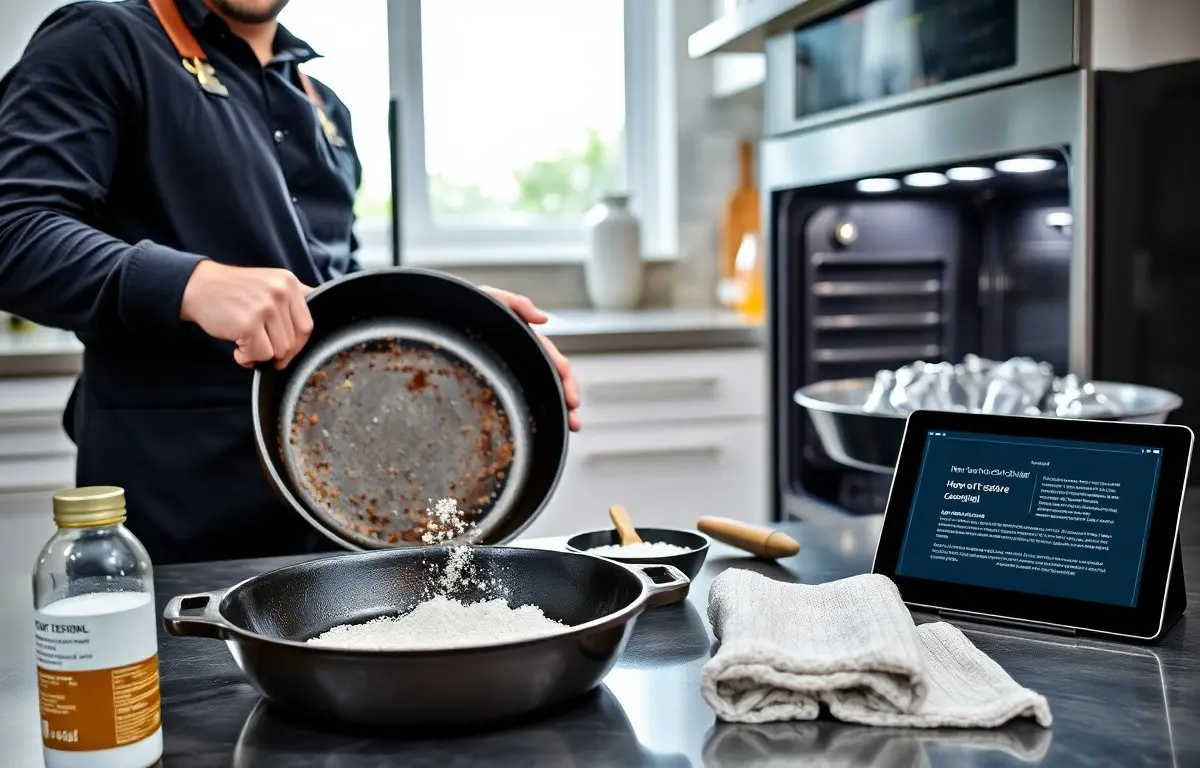
The restorer collects wire brushes, steel wool, and a scouring pad. They add coarse salt, baking soda, and white vinegar. They select a heat-safe oil such as flaxseed oil, grapeseed oil, or vegetable oil. They prepare gloves, eye protection, and a mask for heavy rust. They ready an oven, roasting pan, and clean rags. They set a trash bag for rust flakes and used pads.
Remove Rust And Old Seasoning: Mechanical Cleaning
The person scrubs the pan to remove loose rust and old seasoning. They use a wire brush or steel wool and run firm strokes over the surface. They scrub the interior, exterior, and handle until metal shows. They rinse the pan with warm water and repeat scrubbing on stubborn spots. They avoid electric grinders unless they have experience and control to prevent thin spots.
Re‑Season The Skillet: Layering Oil, Baking Schedule, And Troubleshooting
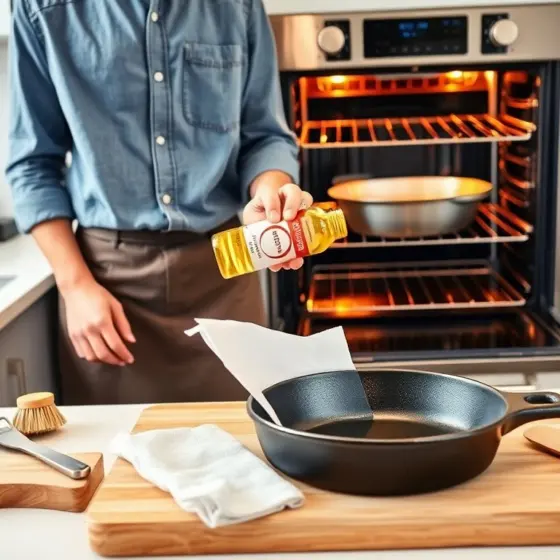
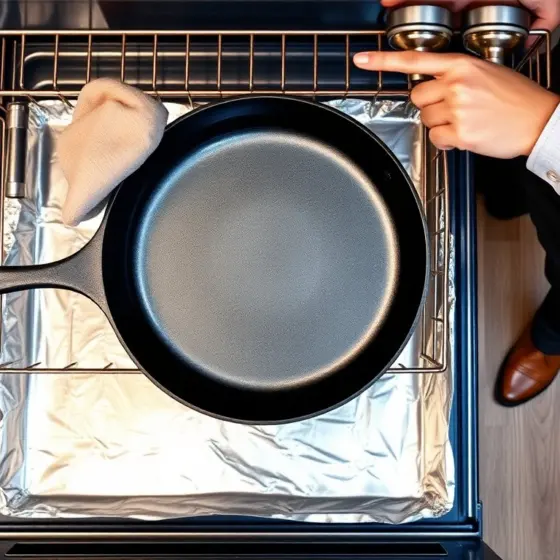
The user applies a thin coat of chosen oil to the whole pan. They wipe off excess oil until the surface looks almost dry. They place the pan upside down in a preheated oven at 450–500°F with foil on the lower rack to catch drips. They bake the pan for one hour and then let it cool in the oven. They repeat thin oil layers and one-hour bakes three to five times for a strong base layer. If the surface feels sticky, they wipe the sticky oil and bake again at a slightly higher temperature until the surface cures. If flaking appears, they strip the loose layers with a pad and restart with thin coats.
Long‑Term Care: Regular Use, Cleaning, And Maintenance Tips
They clean the pan with hot water and a brush after each use. They avoid dish soap when the seasoning is new but may use mild soap sparingly once seasoning cures. They dry the pan on the stove and apply a thin oil coat before storing. They cook with fat regularly to strengthen the seasoning. They avoid soaking the pan for long periods. They reapply a light bake or oil cycle if food starts to stick or the surface dulls.