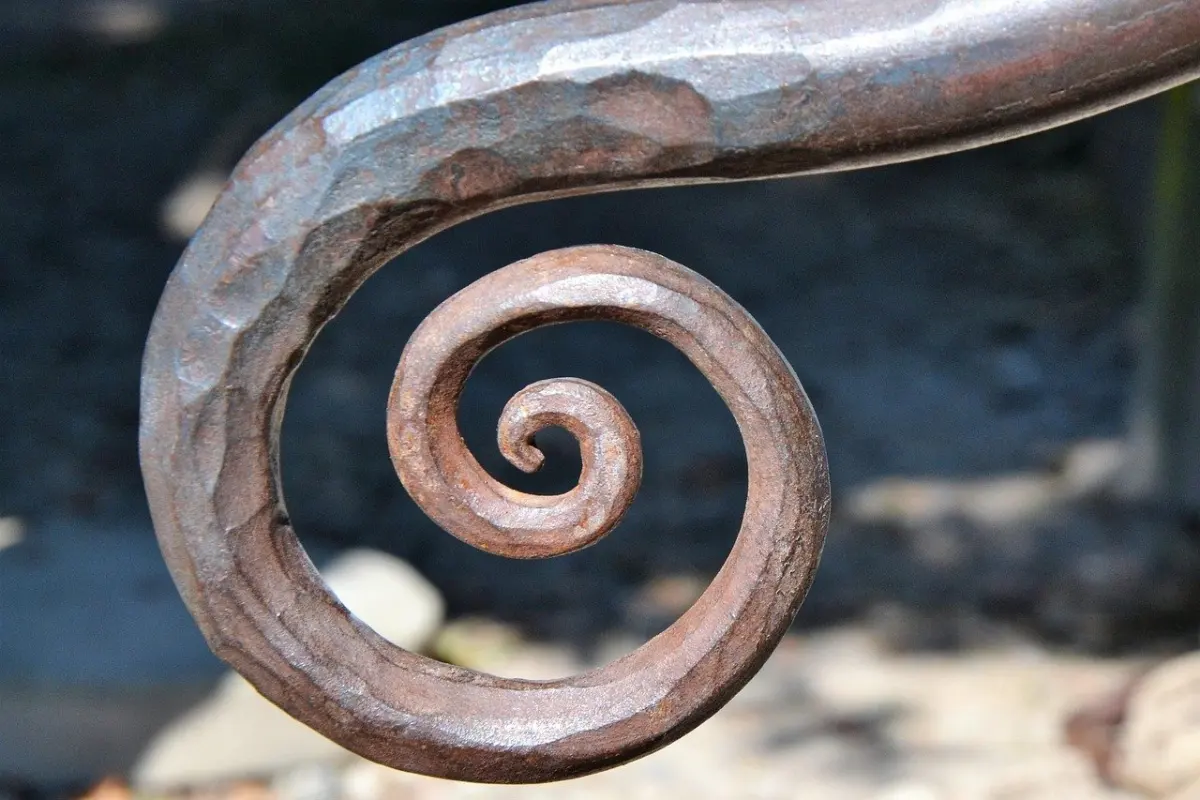
A seller calls a gate wrought iron, so what is wrought iron? Quick answer: historically a fibrous, slag-bearing iron worked by hand; it is no longer made, so the term now refers to metals such as steel.
That one fact clears up most of the confusion buyers meet with furniture and decor. For wider context on metals and finishes, the interior design materials guide places this material alongside its alternatives.
What wrought iron is made of, and what it is not
Wrought iron is composed primarily of iron with 1 to 2% of added slag, the by-product of iron ore smelting, according to the Northern Ireland Department for Communities technical note on ferrous metals. A trade guide adds that it is the purest form of commercial iron, with 0.10% to 0.25% carbon and less than 0.25% impurities, and that the slag shows up as fibrous inclusions called ‘slag’ or ‘stringers’ (The Carpentry Way). Those slag fibres are what separate it from every look-alike.
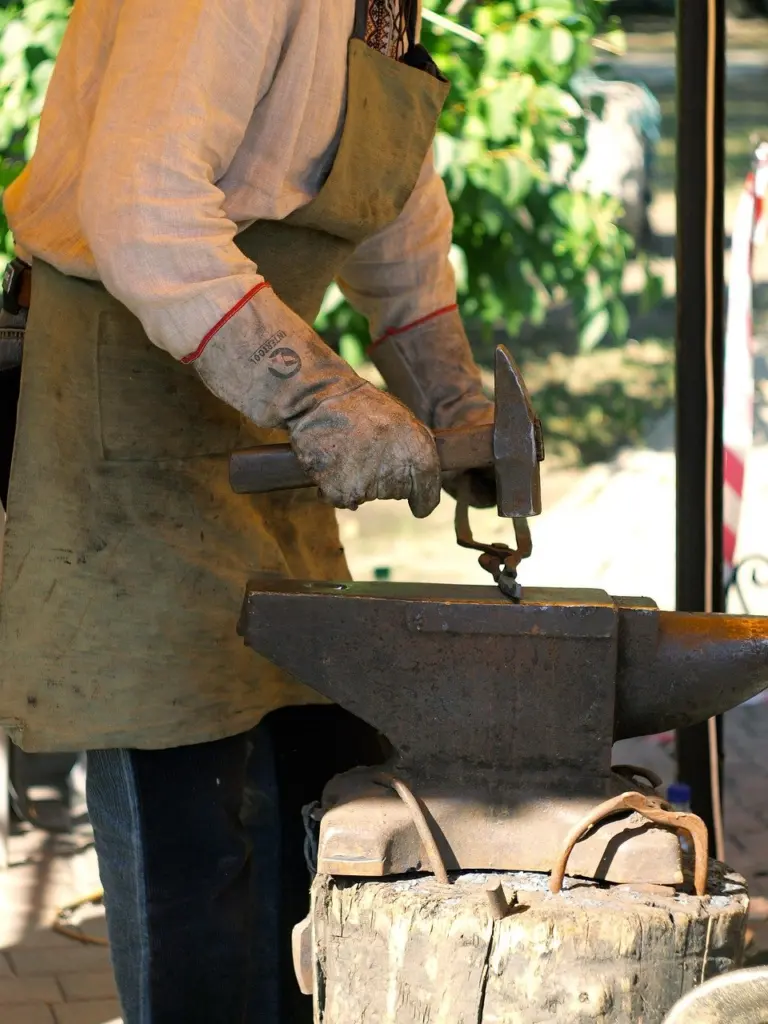
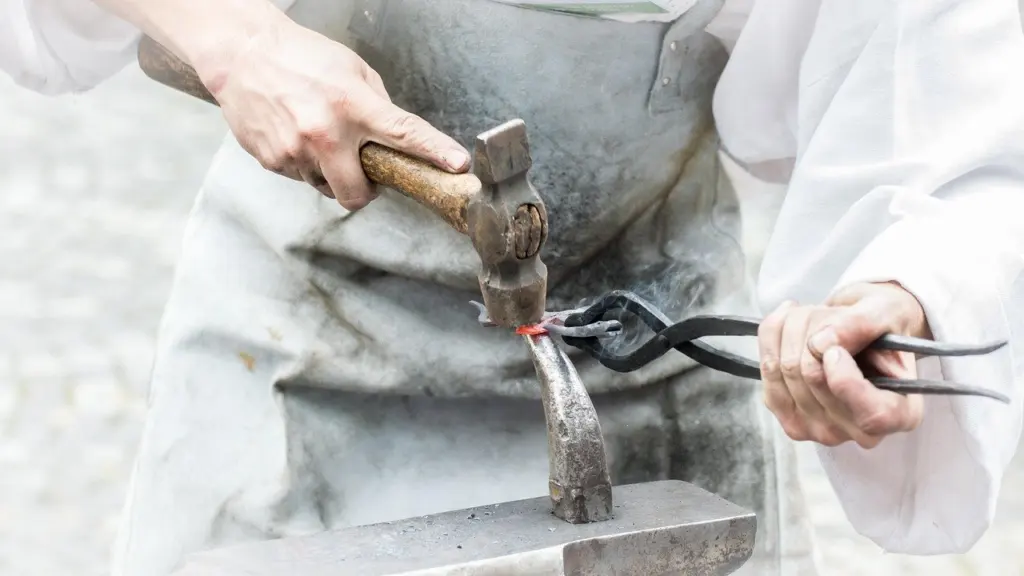
The name describes the method. “Wrought” means worked, so wrought iron simply means worked iron (Tampa Steel). During manufacture the iron is removed from heat and worked with a hammer while still hot. The Northern Ireland note says it was once made by a blacksmith’s hand-working and that the metal then fractures only if it is continually subject to changing stresses. Another trade source says the fibrous grain came from hammering and then rolling cast ingots into much longer bars (Verdigris Metals).
Misconception: iron is iron, so wrought and cast are the same
They are different materials made in different ways, and the contrast below is the single most useful thing to remember when you handle an unfamiliar piece.
| Feature | Wrought iron | Cast iron | Planning use |
|---|---|---|---|
| Composition | Primarily iron with 1 to 2% added slag | Alloy with 2 to 4% carbon, plus smaller amounts of silicon and manganese | Slag points to wrought; high carbon points to cast |
| Appearance | Often fibrous | Carbon particles form elongated graphite flakes as the metal cools | Fibres are a wrought clue, not a surface feature you can always see |
| Behaviour | Softer and more ductile | Brittle, hard and non-malleable compared with wrought iron or steel | A piece that bends rather than snaps suggests wrought iron or steel |
| Making | Hammered while still hot | Liquid mixture poured into moulds to cool and solidify | Hand-worked forms suit wrought; moulded forms suit cast |
Figures and behaviour in the table come from the Northern Ireland Department for Communities technical note.
The same note observes that hammering is not a weakness: the craft mattered because it shaped the fibrous grain that gives the metal its character.
A short timeline of wrought iron production
Wrought iron is a long story with a fairly sharp ending, and the dates help you judge how old a “period” piece could plausibly be.
- 5th century: iron was already available for building construction (Northern Ireland Department for Communities).
- About the 15th century: wrought iron reached Europe, with wide use in the 16th century.
- 18th century: the technology was brought to the United States (Tampa Steel).
- 19th century: it was widely used in building construction, and production reached its high point around 1860 when ironclad warships and railways were in high demand.
- 20th century: steel replaced it in building, and cheaper steel displaced it in the market.
The practical reading for buyers: a genuinely wrought piece belongs to the long era before steel took over, so a gate or bracket with no age history deserves a question.
Is modern wrought iron real?
Mostly no. The metal called wrought iron is no longer made, and the term now refers to metals such as steel (Verdigris Metals). Blacksmiths now use steel as a modern replacement because it has many similar properties. Mild steel, also called plain carbon steel, contains 0.16% to 0.29% carbon, which makes it malleable and ductile (The Carpentry Way).
That is not a reason to avoid new “wrought iron” furniture or railings. It is a reason to read the label as a style description. Steel pieces made by a blacksmith can be well forged and long lasting, but they are not the historic material.
Real wrought iron has not vanished entirely. Restoration specialists can still obtain reclaimed and re-rolled wrought iron for heritage and conservation work, so authentic material is a restoration matter rather than something found in mass-market decor.
How can I tell wrought from cast iron?
No single glance settles it, so build a checklist from the properties that the evidence supports and weigh them together.
- Look for fibre where metal has failed. Wrought iron’s fibrous nature only reveals itself after it has been fractured or severely corroded (Verdigris Metals). A clean, intact surface will not show it, so check broken ends, damaged edges or heavily corroded areas.
- Look for slag stringers. The fibrous inclusions termed slag or stringers are the feature unique to wrought iron among the common look-alikes.
- Test behaviour, not just looks. Compared with wrought iron or steel, cast iron is brittle, hard and non-malleable, while wrought iron is softer and more ductile. A bar that has been bent without cracking suggests wrought iron or steel, whereas a clean break in a thin section suggests cast iron.
- Think about how it was formed. Cast iron was poured into moulds and allowed to cool and solidify, and its graphite flakes form inside its microstructure as it cools. These are structural details, not surface marks to spot by eye.
- Compare carbon figures if analysis is available. Cast iron carries 2% to 4% carbon by weight, against 0.10% to 0.25% for wrought iron and 0.16% to 0.29% for mild steel (The Carpentry Way). A carbon test therefore separates cast iron clearly, but the wrought and mild steel ranges overlap, so the slag fibres remain the decisive clue between those two.
Fibre in the break, slag stringers and ductile behaviour together make a persuasive case. One clue alone, particularly a surface look, should not carry a purchase decision.
Buying wrought iron furniture and decor
Treat “wrought iron” on a listing as a question rather than an answer. Ask whether the piece is reclaimed or antique material, or newly made from steel, and ask for provenance on anything described as period. If the seller can show a break, a corroded edge or an unseen cut end, use it to look for fibres.
If you want the look, new steel pieces deliver it, and for a heavy structural load the choice between iron types matters more than the label. The sibling guide Cast Iron Vs Wrought Iron: How To Choose The Right Metal For Your Project In 2026 works through that decision. If your project is heating rather than furniture, Cast Iron Radiators: Timeless Heat — The Complete Buyer’s Guide & Maintenance Tips (2026) covers a cast product that follows different rules. More material explainers sit under Craft & Materials.
Frequently asked questions
| Question | Answer |
|---|---|
| Does old wrought iron rust away? | Old wrought iron is very pure, and when exposed to the weather it forms a skin of black oxide that protects it against further decay (Northern Ireland Department for Communities). |
| Is wrought iron stronger than cast iron? | In tension, yes. It has a much higher tensile strength than cast iron, which makes it more suitable for horizontal beams. |
| Can wrought iron break? | It can, but it fractures only if it is continually subject to changing stresses. |
| Does hammering weaken it? | No. Wrought iron gets stronger the more it is worked, which is why hand working suited it. |