How to remove rust from metal is a common question for people who keep tools, furniture, or equipment. This guide lists five fast, safe methods that work in 2026. It shows when to use each method. It warns about safety steps. It helps readers pick the right approach for light to heavy rust.
Key Takeaways
- Assess the metal type and rust severity before deciding how to remove rust from metal to prevent damage.
- Use mechanical methods like wire brushes and sandpaper for light surface rust and power tools for larger jobs.
- Household remedies such as vinegar and baking soda are effective for small rust removal, while commercial rust removers work better for stubborn rust.
- Electrolysis and media blasting are advanced techniques suited for deep or heavy rust but require safety precautions and expertise.
- Prevent rust from returning by applying corrosion-resistant primers, protective coatings, and regular maintenance like touching up scratches and oiling metal surfaces.
Assess The Metal, Rust Severity, And Safety Precautions
They inspect the metal to decide how to remove rust from metal. They check the metal type, the rust depth, and any thin or pitted areas. They test a small spot with a wire brush. If the metal flakes or bends, they treat it gently. They note painted or plated surfaces before starting.
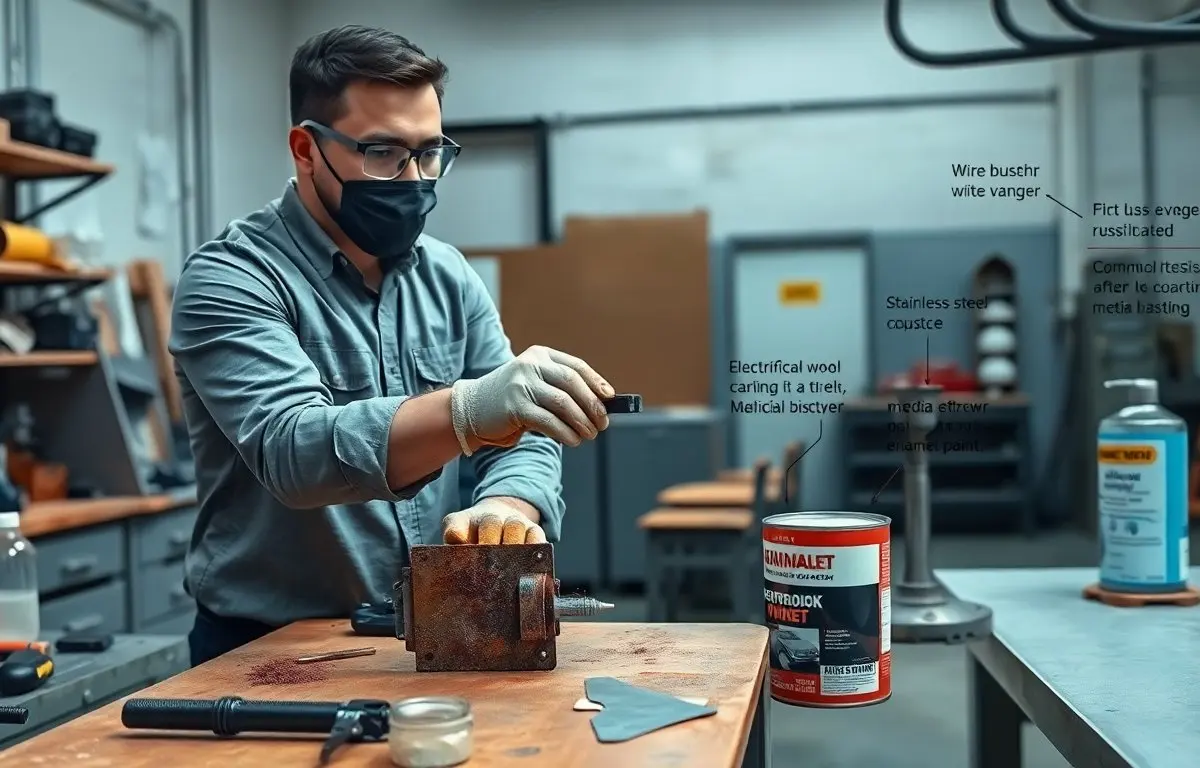
They follow safety steps. They wear gloves, eye protection, and a dust mask. They work in a well-ventilated area. They keep flammable chemicals away from heat and sparks. They disconnect batteries or power on equipment before cleaning. They prepare a drop cloth to catch debris and run-off.
They choose tools that match the job. For light surface rust, they pick mild abrasives or household remedies. For heavy rust, they plan stronger mechanical or chemical methods. They remember that choosing the right method reduces damage and speeds repair. They repeat this assessment if rust persists after the first treatment.
Mechanical Methods: Sanding, Wire Brushes, And Abrasive Tools
They use mechanical methods to remove rust from metal when the corrosion sits on the surface. They start with a wire brush for loose rust. They follow with medium-grit sandpaper to smooth the area. They finish with fine-grit sandpaper to prep for coating.
They use power tools for larger jobs. They attach a wire-wheel or sanding disc to a drill or angle grinder. They hold the tool steady and move across the surface. They keep short passes to avoid overheating the metal. They check the work often to avoid removing sound metal.
They use abrasive pads for curved or delicate parts. They choose stainless-steel wool to reduce metal residue. They clean metal shavings from crevices with a stiff brush. They wipe the metal with a cloth dampened with mineral spirits or acetone to remove oils and dust before applying rust inhibitors or paint.
They practice safe tool use. They secure the workpiece, wear eye protection, and clamp small parts. They avoid breathing metal dust and stop if the tool emits smoke or odd odor.
Household And Chemical Remedies: Vinegar, Baking Soda, And Commercial Rust Removers
They try household remedies to remove rust from metal on small items. They soak small parts in white vinegar for one to eight hours depending on rust. They scrub the part with a brush after soaking. They rinse and dry the part thoroughly.
They make a paste with baking soda and water for light rust. They apply the paste, let it sit for 15 to 30 minutes, and scrub with a brush. They rinse and dry the metal. They repeat on stubborn spots.
They use commercial rust removers for faster results on larger or stubborn rust. They follow the product label exactly. They wear gloves and eye protection. They work outdoors or in a ventilated space. They neutralize acid-based removers with water and baking soda when the label instructs.
They test any chemical on a small area first. They avoid mixing chemicals. They rinse residues completely and dry the metal. They apply a corrosion inhibitor or primer after cleaning to stop rust return.
Electrolysis And Other Advanced Techniques For Heavy Rust
They choose electrolysis to remove rust from metal when rust penetrates deeply. They set up a plastic tub, a battery charger, and a sacrificial steel plate. They use a washing soda solution as the electrolyte. They connect the negative charger clamp to the rusted item and the positive clamp to the sacrificial plate.
They run the charger at a low amp setting and monitor the process. They watch for bubbling and black residue on the sacrificial plate. They remove the item after several hours or when rust loosens. They scrub and rinse the part and dry it completely.
They take precautions. They place the setup outdoors or in a ventilated area. They keep sparks and open flames away. They avoid electrolysis on plated or thin metals that may strip the base layer.
They try media blasting for heavy industrial rust. They choose the media and pressure to match the metal hardness. They hire a pro for large or complex parts. They document the part condition before starting to track progress and avoid over-blasting.
Preventing Rust Return: Priming, Coatings, And Long-Term Protection
They stop rust return after they remove rust from metal. They apply a rust converter on any remaining iron oxide. They prime the cleaned metal with a corrosion-resistant primer. They use a paint or coating that matches the use environment.
They choose coatings for outdoor metal. They use enamel, epoxy, or powder coat for long-term protection. They recoat hinges and joints regularly. They treat small scratches quickly to prevent new rust spots.
They use sacrificial protection for critical parts. They attach zinc anodes or use galvanic coatings on boat or outdoor equipment. They store metal items in dry areas. They apply light oil, wax, or silicone spray to tools and hardware to repel moisture.
They inspect treated metal on a schedule. They touch up chips and clean surface dirt. They replace seals and gaskets that trap moisture. They keep records of maintenance dates to reduce the chance that rust returns.