| Piece or decision | What to check | Planning use |
|---|---|---|
| Sofa and room | Measure, then double-measure, then measure the route the piece takes into the home | Settle the space and the delivery path before you compare styles |
| Sofa footprint | Outline the furniture dimensions on the floor with painter’s tape | Walk around the taped shape to judge whether the room still works |
| Sofa feel | Seat depth, cushion firmness, back height and arm style | Compare these attributes in person, not just the listed dimensions |
| Sofa seating | One comfortable seat per seat cushion | Count cushions to estimate how many people the piece really seats |
| Living room rug | All major pieces on the rug, or at minimum the front legs of the seating | Choose the rug after the furniture layout is fixed |
| Dining rug | Chairs stay on the rug even when pulled out | Size the rug to the chair movement, not only the table |
The table draws on an interior design studio’s pre-purchase advice and a set of furniture-buying tips.
A furniture buying guide works best when it starts with measurements: measure the room and the delivery route, tape the footprint on the floor, and choose a rug from the furniture layout rather than the reverse.
The sections below take sofas, rugs and wall art in the order most rooms are planned, then branch out to tables, storage, bedroom pieces and outdoor furniture. Each section points to a deeper guide when you need the detail for one piece.
Sofas: sizing and fit
A sofa sets the limits for the rest of the living room. Settle its size by the room and the route into it, confirm its footprint on the floor, and only then judge how it feels to sit on.
How to choose a sofa size
Begin with the room, not the catalogue. One furniture-tips guide gives a blunt rule: measure, then double-measure, then measure how you are going to get the piece in. The delivery route is the part buyers skip. A sofa that suits the room can still fail at a narrow stairwell, a tight turn or a doorway, and the route is as much a constraint as the floor area.
Once the room and route are known, translate the product dimensions into something you can see. An interior design studio recommends using painter’s tape to outline the dimensions of furniture directly on your floor. This is the most useful sizing step, because a number on a product page says little about how much of the room a sofa will take. Leave the tape down for a day or so and walk through the room as you normally would. If you keep stepping around the outline, the sofa is too large for that position, or the room wants a different layout.
Retailers that publish detailed product measurements for each piece, as one furniture retailer states it does, make the comparison straightforward. Check the overall width, depth and height from the product page against your tape outline and the measured route. When a listing omits a dimension, ask for it before ordering rather than assuming.
Fit beyond the overall footprint
Matching the footprint is necessary but not sufficient. The studio’s guide notes that sofas with the same measurements can feel completely different depending on arm style and cushion depth. It lists the attributes worth comparing: seat depth, cushion firmness, back height and arm style. These decide whether a sofa suits the people using it, and none shows up in a headline width.
- Seat depth. A deeper seat suits lounging and a shallower one suits upright sitting. Choose by how the household actually uses the sofa, not by what looks generous in a photo.
- Cushion firmness. Firmness is a comfort preference that only a sit-test settles, so avoid judging it from a description alone.
- Back height. This affects both support and how much of the sofa’s bulk you see across the room. Higher backs can read as heavier in a small space.
- Arm style. Arms change how much of the footprint is usable seat and how the sofa looks next to a side table or armchair.
The same guide advises testing upholstered pieces in person where possible. If you are buying online, treat the first weeks as a trial and check the return terms before you commit.
Sofa, sectional or loveseat
The shape of the piece matters as much as its length. A furniture retailer’s buying guide summarises the trade-off in a few words: a sofa is more flexible, while a sectional seats more people. Choose the sofa if you expect to rearrange the room, move house or change its use. Choose the sectional only when seating capacity is the priority and the room’s layout is unlikely to change. For a smaller room, the comparison in loveseat vs sofa shows when stepping down a size is the better call.
Rugs: sizing from the furniture layout
A rug is a layout decision, not a floor-covering decision. Fix where the furniture goes, then size the rug to it.
What rug size fits my room?
The studio’s guidance is to select the rug size based on your furniture layout, not the other way around. In practice that means the room’s dimensions are a ceiling, not a target. A rug that fills the floor but leaves the sofa and chairs hovering at its edges still looks unplanned.
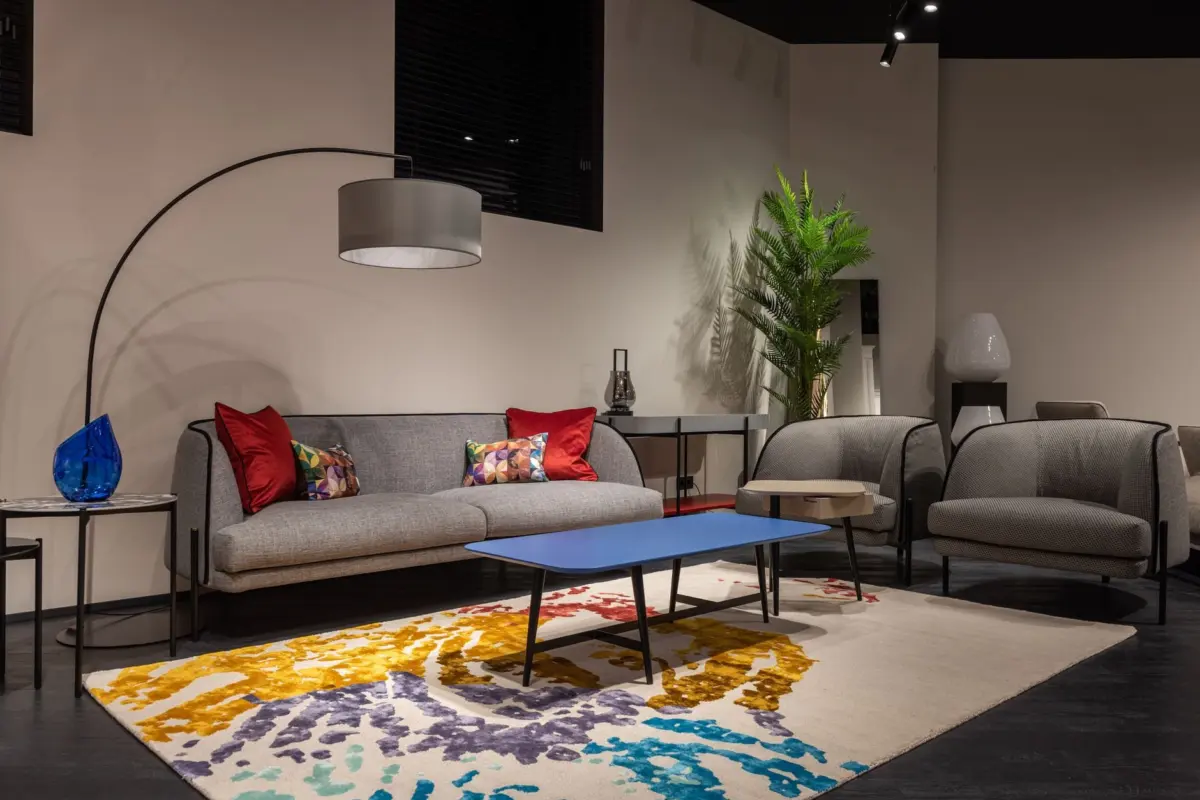
The same guide describes the strongest result as all major furniture pieces sitting on the rug for an anchored look. Where the room cannot take that, the minimum is for the front legs of the seating to rest on it. That gives you two clear options for a living room:
- All major pieces on the rug. This suits larger rooms and open layouts, where the rug has to hold the seating group together.
- Front legs on the rug. This suits tighter rooms, where a rug that took every leg would crowd the walkways.
Either way, lay out the footprints with tape, as with the sofa, and mark the rug outline too. A room-by-room breakdown of this approach is in Find the Perfect Rug Size: A Simple Room-by-Room Guide (2026), which is the place to go when a specific room does not behave like the general rule.
Dining spaces
A dining rug fails in a different way. The test is movement, because chairs are pulled out whenever someone sits. The studio advises choosing a rug large enough that chairs remain on the rug even when pulled out. Judge size from the table’s reach plus the space each chair needs, not from the tabletop alone. A rug that catches chair legs at the edge is both unstable and hard to keep tidy.
What a rug adds
A rug also does work beyond coverage. A furniture retailer lists rugs among the pieces that add warmth and texture and define different areas within a room. That second role is especially useful in open-plan spaces, where one rug can mark a seating zone without a wall. If you are using a rug to define an area, size it to the whole zone, not to the coffee table at its centre. That decision links to the table you choose, covered below.
Wall art: choosing and placing it
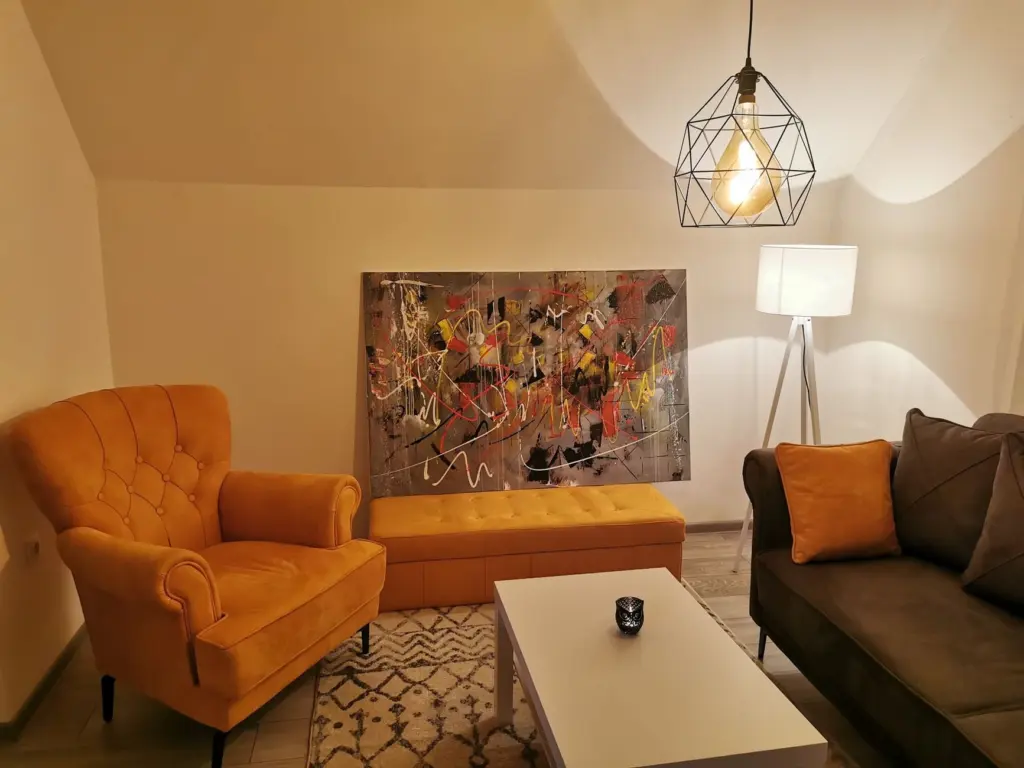
Wall art is the lightest purchase and the easiest to get wrong by buying too early. A furniture retailer describes artwork as a way to express your personal taste and bring visual interest to your walls. It is the piece that carries personality, which is why it rewards waiting until the furniture is placed.
Buy art after the sofa, rug and tables are in position, because only then do you know which wall is empty, how much of it the furniture covers and what the art has to relate to. Hold the piece against the wall or mark its outline in the same way you would a sofa, and look at it from the seating position, not from standing next to the wall.
Several practical choices follow from that:
- One large piece or a grouped arrangement. A single large canvas gives a calm focal point and suits a wall with little else on it. A grouped arrangement of framed pieces suits a longer wall and lets you add or swap pieces over time.
- Art relating to furniture. Art that sits above a sofa or console should read as part of that furniture group, not float on its own. Keep the art in proportion to the piece beneath it.
- Art among other surfaces. Where the wall also has a console table or shelves, plan the art and the surface together. How to Style a Console Table: 7 Simple Steps to Make It Pop in 2026 shows how art, lamps and objects work as one composition, and How To Style A Bookshelf: 9 Simple Techniques To Look Curated In 2026 does the same for shelving.
Photos online are illustrative, so check the real dimensions and frame depth on the product page before ordering, just as you would for a sofa.
Materials and durability
Material choice is a question of what wears out first and what is easy to live with. The best-supported durability point for upholstered pieces is about cushions. A furniture-tips guide states that all cushions on any upholstered piece will break down over time. It also means that cushion construction deserves as much attention as the cover.
Use that to guide how you compare materials:
- Upholstery covers. The cover shapes how a sofa looks, cleans and ages, and the choice between leather and fabric depends on household use. Leather vs fabric sofa works through that choice in detail.
- Frames and tabletops. Wood and metal behave differently under daily use, and combining them is a common way to balance warmth and strength. Wood And Metal Coffee Tables: Stylish, Durable Choices For Living Rooms In 2026 covers the practical differences for living-room tables.
- Cast and wrought iron. Iron suits pieces that have to take weight and last, and its care needs are different from upholstery. The bedroom and outdoor sections below point to the right guides.
Whatever the material, test it in person where you can. The studio’s advice to try upholstered pieces before buying applies to covers and cushions as well as frames, because texture and firmness are not reliably conveyed by a listing.
Tables, consoles and shelving
Tables and shelving sit between seating and walls, so they inherit the constraints of both. Their size is set by the sofa and rug they serve, not by their own catalogue dimensions.
Coffee tables
The coffee table should relate to the sofa it sits in front of and the rug beneath it. Because the rug is sized from the furniture layout, plan the table at the same time, with tape on the floor as for the sofa. A table that is too large blocks walking space, and one that is too small looks lost in the seating group. How big should a coffee table be sets out the proportions that avoid both problems.
Consoles and bookshelves
Consoles and shelves are the pieces where decor does most of the work. Buy the furniture for its proportions and storage, then add objects and art afterwards. Taping the footprint matters here too, because slim pieces still project into a hallway or behind a sofa, and narrow circulation spaces are where a few extra inches of depth are most noticeable.
Bedroom furniture and storage
Bedroom pieces follow the same measure-first rule, with extra attention to access, because beds and wardrobes are bulky and are often carried up stairs and through narrow doors. Measure the route into the room before you compare styles.
- Bed frames. Metal frames give a durable, traditional look, and Iron Bed Frames: The Ultimate Buyer’s Guide To Durable Style covers what to check. If the mattress is a queen, Iron Bed Frame Queen: The Buyer’s Guide To Durable, Stylish Queen Frames narrows that down to the size you will actually shop for.
- Support systems. Whether the frame needs a foundation affects both cost and the finished height of the bed. Platform bed vs box spring explains the choice.
- Storage. Freestanding storage is a different decision from built-in closets, with different space demands. Wardrobe vs armoire compares the two for freestanding use.
- Older frames. If you own or are buying a period piece, its value depends on condition and features rather than on general rules. How Much Is My Antique Cast Iron Bed Frame Worth? A Practical 2026 Valuation Guide covers that separately.
Outdoor furniture
Outdoor furniture shares the sizing logic of indoor pieces but adds weather to the list of constraints. Measure the patio or deck, tape out the layout, and allow for walking space just as you would indoors. The choice then turns on material, because outdoor pieces face sun and moisture that indoor ones do not.
For a direct comparison of options, best material for outdoor furniture weighs the main choices against size and use. If metal appeals for its weight and traditional look, Wrought Iron Patio Furniture: Timeless Style, Smart Picks, And Easy Care (2026) covers styles and upkeep.
Planning the order and timing of purchases
Sequence matters because many choices depend on earlier ones. The rule that anchors the order is the one already given for rugs: layout comes first, and the rug follows it. Extending that logic, buy the largest pieces first, since they fix the walkways and wall space everything else has to fit, then add the rug, tables, lighting and art.
A sensible working order looks like this:
- Measure the rooms, doorways and routes into the home.
- Tape out the sofa and any large seating on the floor.
- Confirm the layout, then size the rug to it.
- Choose tables and storage to suit the seating and rug.
- Add art and objects last, once the walls and surfaces are clear.
Timing is a separate question from order. If you can wait, best time to buy furniture explains when to expect better value. Waiting is only sensible if the measuring work is done in advance, so you can act quickly on a good price.
Frequently asked questions
How many people will a sofa seat comfortably?
A furniture-tips guide gives a simple rule: the number of seat cushions is roughly how many people will be comfortable. Count seat cushions rather than relying on a length figure.
Where can I find a piece’s exact measurements?
Look on the product page. Some retailers state that they provide detailed measurements for each piece. Compare those figures with your taped outline and the route into the home before ordering.
Is a large sectional a good idea for a small living room?
Usually not. An interior design guide warns that a large sectional in a smaller living room can make the space feel crowded. A standard sofa is more flexible, so tape both outlines and see which one leaves the room workable.
Do I need to buy the rug before the sofa?
No. Choose the rug after the furniture layout is set, since its size should follow the arrangement of the pieces that stand on it.