| Feature | What the evidence shows | Planning use |
|---|---|---|
| Weight | Wrought iron pieces are often 15 to 30 pounds heavier than comparable cast aluminum pieces | Plan for fixed placement, and check that you can lift pieces before you buy. |
| Wind | Heavy build that will not blow away or easily tip over | Suits exposed patios where lighter chairs would travel. |
| Rust | Can rust anywhere the finish chips | Inspect often and fix chips as soon as they appear. |
| Protective wax | A coat of wax once or twice a year protects the finish | Put the wax coat in your seasonal routine. |
| Price | Usually more expensive than cast aluminum, partly because it takes more labor to make | Budget for a higher entry price than aluminum. |
| Warranty (one maker) | 20-year structural warranty on frames; finishes guaranteed against fading, blistering and peeling for 5 years; cushions and fabrics covered for 5 years | Compare what each maker covers and for how long, not only the price. |
Weight, rust, wax and price points come from a wrought iron versus cast aluminum comparison, and wind and warranty details from the O.W. Lee wrought iron collection.
Wrought iron patio furniture is a good choice when you want heavy, stable, decorative pieces and will touch up chipped finish promptly. It suits exposed patios, but it needs more attention than cast aluminum.
This page focuses on the material itself. The furniture buying guide covers wider choices, and the best time to buy furniture guide helps with timing a purchase.
What the weight means in practice
The first thing to know about wrought iron is that it is heavy. O.W. Lee, a maker of wrought iron furniture, notes that wrought iron will not blow away in the wind or easily tip over. A comparison of the two metals adds that wrought iron pieces are often 15 to 30 pounds heavier than comparable cast aluminum pieces. The comparison gives no total weight for a whole set, so judge a set by how its individual chairs and table feel when you lift them.
That weight shapes several everyday decisions:
- Wind exposure: On a rooftop, an open deck or a gusty garden, the extra mass keeps chairs where you put them. This is the strongest practical argument for iron over lighter metals.
- Rearranging: Heavy chairs are harder to drag aside or carry to a shed. Settle on a layout you can live with before the set arrives, and ask whether you will need to move it each season.
- Strength: The manufacturer describes the material as extremely durable and very difficult to break. A sturdy frame is reassuring for tables that carry full dinners and for chairs that get regular use.
- Storage: If you plan to carry pieces indoors every winter, weight becomes a real cost. A stacking chair is easier to put away than a fixed-frame one.
Where wrought iron suits a patio
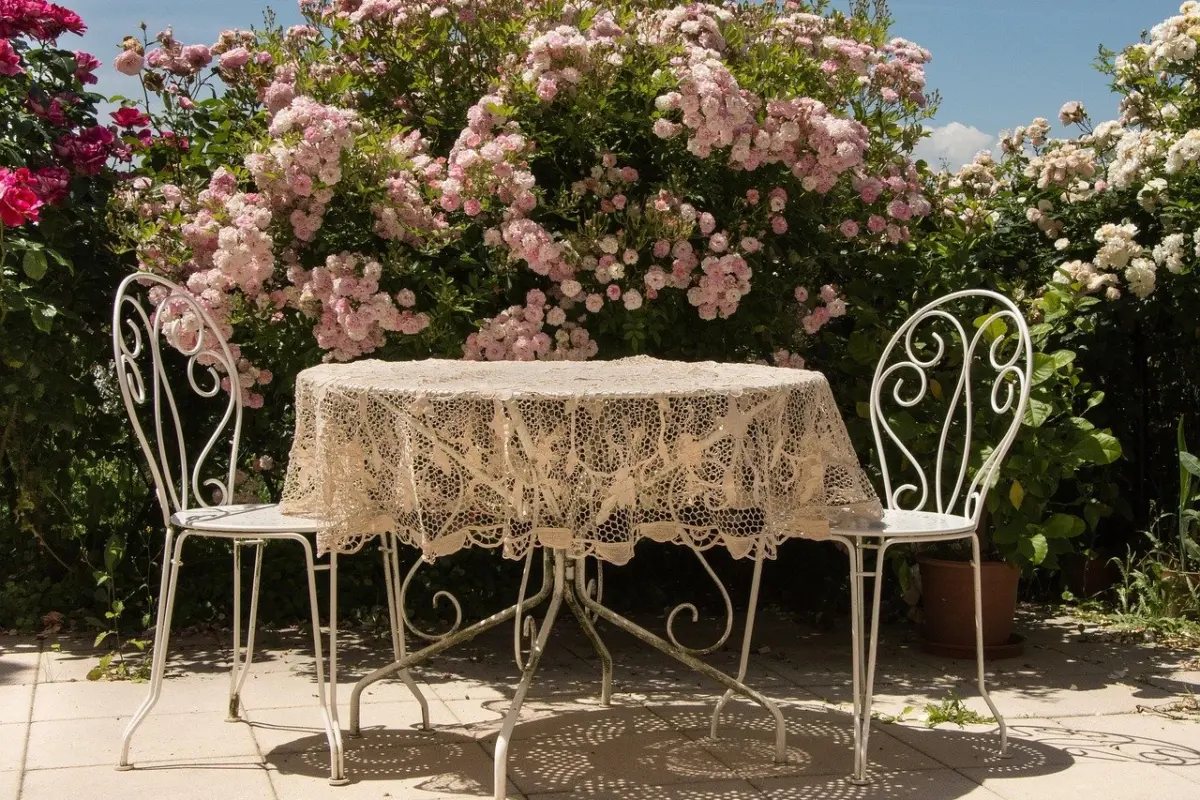
Yes, wrought iron is a good patio material, provided you accept its upkeep. Retailers describe it as an ideal choice when seeking both style and comfort, and one dining-chair listing calls such chairs relaxing, weather-resistant, and easy to care for. Those are sellers’ descriptions. The comparison above is more cautious: wrought iron needs more attention than cast aluminum.
The two views fit together once you separate the material from its coating. Iron is easy to live with while the finish stays whole, and the work starts when it chips. Use that to decide:
- Choose wrought iron if you value a classic look and intricate designs, since the maker calls it a classic patio furniture material that lends itself to more intricate designs. It also suits windy spots, and you should be willing to check the finish regularly.
- Look at cast aluminum instead if you want the least upkeep or lighter furniture. Powder-coated cast aluminum cannot rust, so it often lasts longer outdoors.
Choosing pieces and setting a budget
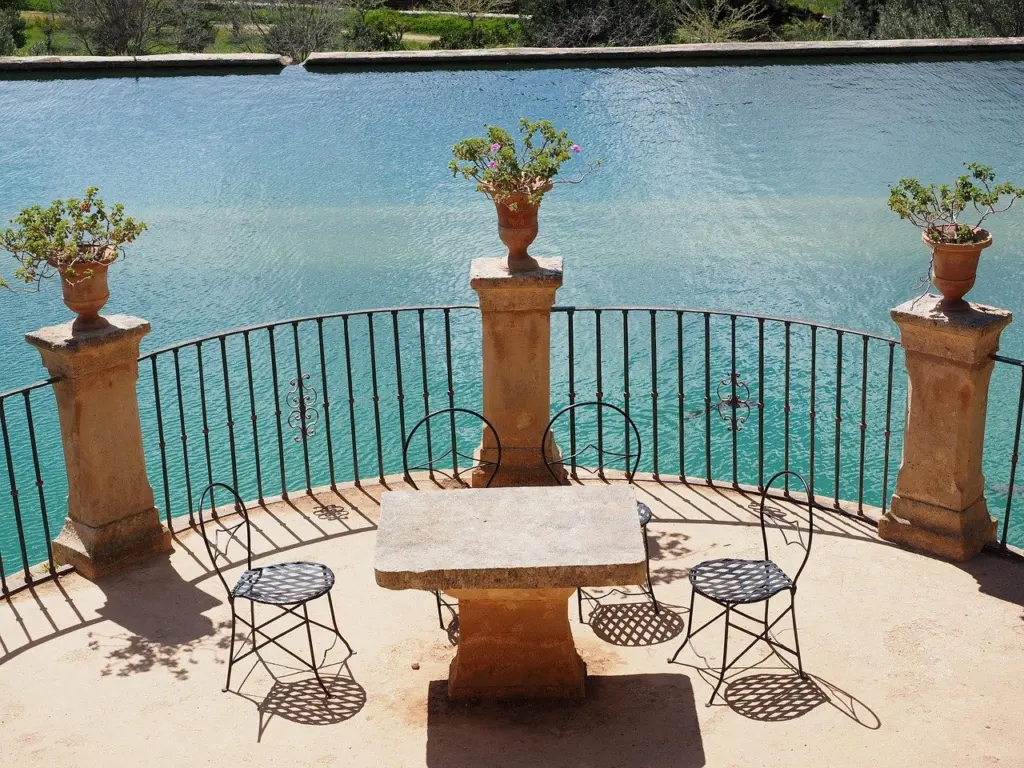
Start with the format that fits your space, then compare prices per piece. A compact bistro set is the simplest way into the style, and a full dining set suits a patio that hosts more people. Prices are not interchangeable between those formats. One retailer lists the Woodard Maddox wrought iron stacking bistro side chair at $342.30 on sale, against a listed MSRP of $489.00. The same page lists the Woodard Sheffield dining arm chair as a set of 2 at $1,267.00, down from $1,810.00. These are single listings, not a market average, but they show that a patio set built from several chairs adds up quickly. The stacking design of the bistro chair also helps with winter storage.
Cushions and fabric
Cushions are a separate decision from the frame. One maker offers 10 frame finishes and over 100 fabric options, so you can match frame and fabric to the rest of the garden. Treat the cushion warranty as part of the price. The same maker backs cushions and fabrics with 5-year warranties.
Warranties as a comparison tool
Warranties vary by component. O.W. Lee gives a 20-year structural warranty on frames, and its finishes are guaranteed against fading, blistering and peeling for 5 years. Read each brand’s terms for what counts as a defect, because a structural guarantee does not necessarily say anything about rust that starts at an impact chip.
Finishes, powder coating and why iron rusts
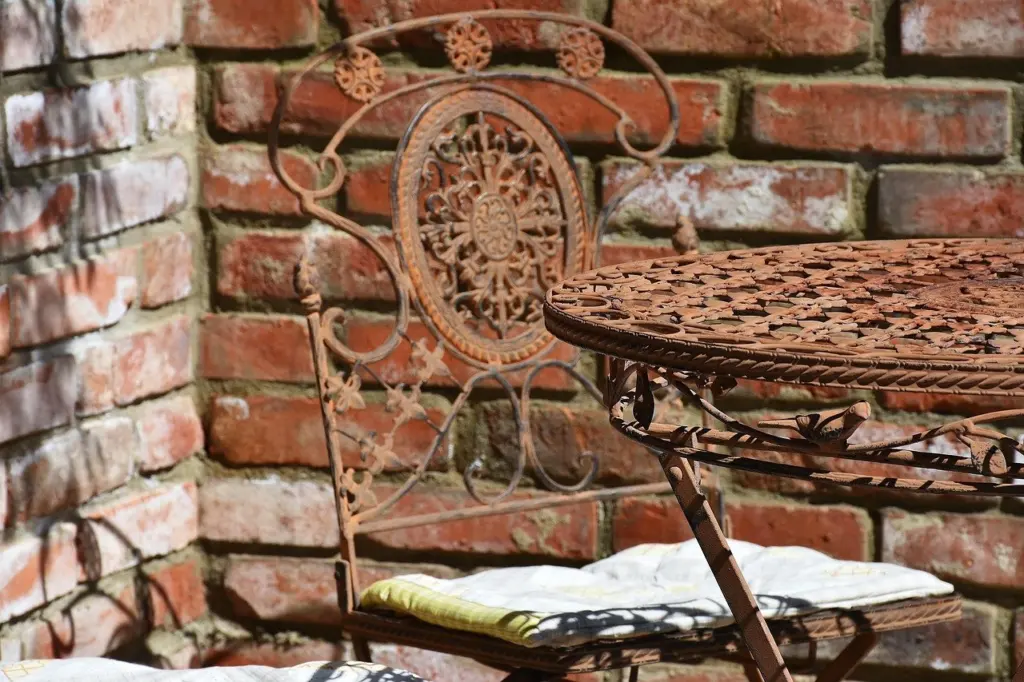
Rust follows from the way iron and its finish interact. A powder-coated finish adds protection against scratches and fading, and that protection is the main barrier between bare iron and water. Wrought iron can rust anywhere its finish chips, whereas aluminum cannot rust at all. The finish therefore matters more than the iron itself.
That gives a simple way to compare finish options:
- Powder-coated wrought iron: Resists scratches and fading, but any chip that reaches bare metal becomes a rust risk. It rewards owners who inspect and repair.
- Powder-coated cast aluminum: Needs no rust repair, which is why it suits owners who want less routine work, though it gives up the weight that keeps furniture steady in wind.
- Maker finish range and warranty: A choice of 10 frame finishes lets you pick a colour, and a finish warranty against fading, blistering and peeling for 5 years, as one manufacturer offers, gives you a standard to measure other brands against.
Stopping rust and repairing chips
The best rust prevention is a short routine that catches damage early. Ornate designs have many curves, joints and edges, so check them deliberately rather than glancing at the flat surfaces.
- Inspect the finish: Look over frames, feet and the scrolled areas for chips before rust has a chance to spread.
- Repair at once: The recommended fix is to sand and repaint chips with matching paint as soon as you see them. Delay is what turns a small chip into a larger repair.
- Add wax protection: Apply a coat of wax once or twice a year to protect the finish, as the same comparison advises.
- Expect more care than aluminum: This is the trade-off for iron’s weight and detail. Owners who accept it tend to be satisfied, and owners who do not should consider another metal.
Related reading
Iron indoors raises different questions from iron outdoors. If you own an older iron bed, see How Much Is My Antique Cast Iron Bed Frame Worth? A Practical 2026 Valuation Guide. More home-furnishing guides are collected under Furniture & Decor.
Frequently asked questions
How heavy are wrought iron sets?
Individual wrought iron pieces are often 15 to 30 pounds heavier than comparable cast aluminum pieces. No whole-set weight is quoted, so lift a showroom chair before you commit.
Does powder coating make wrought iron rustproof?
No. Powder coating protects against scratches and fading, but wrought iron can still rust wherever the finish chips, so chips need repainting promptly.
Is wrought iron cheaper than cast aluminum?
Usually not. Wrought iron tends to cost more, partly because it takes more labor to make.
What do wrought iron furniture warranties cover?
It depends on the maker. One manufacturer offers a 20-year structural warranty on frames, 5 years on finishes against fading, blistering and peeling, and 5 years on cushions and fabrics.