
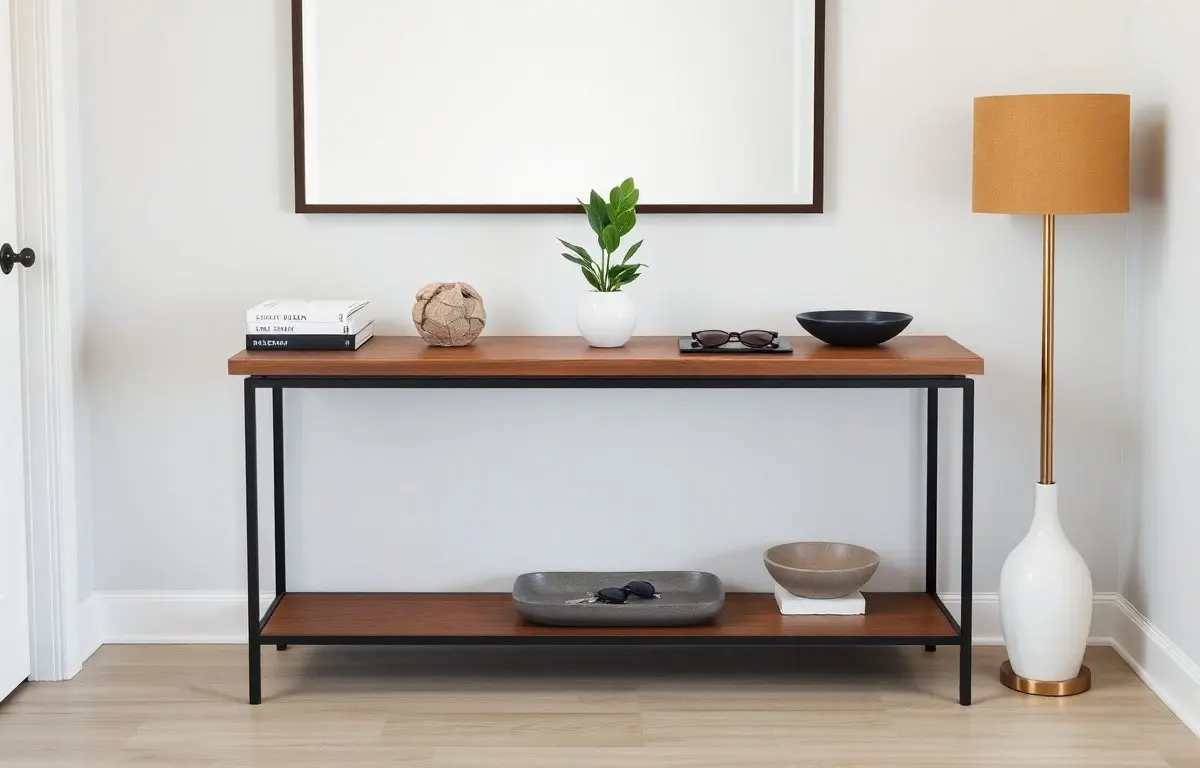
How to style a console table is a common question for people who want an entryway or hall to feel complete. This guide shows clear steps. It gives practical rules and quick examples. Each step focuses on scale, function, and visual rhythm. The reader will learn how to pick a table, set a layout, add layers, and add finishing touches that feel personal.
Key Takeaways
- Choose a console table that fits your space, allowing for clear walkways and easy access, with a height between 28 and 36 inches.
- Define a clear styling purpose for the console table and arrange objects in groups of odd numbers across three visual zones for balance.
- Layer the table with practical decor like books, trays, and bowls to add height, texture, and order without clutter.
- Incorporate lighting and greenery to add warmth, texture, and life, selecting plants suited to narrow tables and balancing light placement.
- Personalize your console table with meaningful art and accessories to create a lived-in, intentional look that can be easily updated.
Choose The Right Console Table For Your Space
Choose a console table that fits the wall width and traffic flow. Measure the wall first. Leave at least 30 inches of clear walkway for small halls and 36 inches for busier areas. Select a table depth that allows doors and drawers to open without obstruction. Pick a height between 28 and 36 inches for easy reach. Match the table material to the room use: a solid wood top for durability, glass for lightness, or metal for a contemporary look. Keep the table proportional to nearby furniture and architectural features.
Decide On A Styling Purpose And Layout
Decide what the console table will do. Will it hold keys and mail, show art, or display plants? Define one main function and one secondary function. Set a layout rule: odd numbers of objects read better than even numbers. Group items into three visual zones: left, center, and right. Place everyday items near the edge for quick access. Reserve the center for a statement or a mirror. Keep the surface clear enough to avoid clutter and to keep movement around the table easy.
Layer With Decorative Essentials (Books, Trays, And Bowls)
Use books to create height and to group small items. Stack two to four hardcover books and place a decorative object on top. Add a tray to contain keys, sunglasses, or change. Choose a shallow bowl for loose items and switch it when needed. Keep tray and bowl materials simple and matte to avoid visual noise. Vary textures by mixing wood, metal, and ceramic. These layers answer practical needs and refine the look for people learning how to style a console table.
Incorporate Lighting And Greenery For Texture And Warmth
Add a light source to create warmth and usable surface light. Choose a table lamp or a pair of wall sconces. Place the lamp where it balances the anchor piece. Introduce live plants or a simple branch in a vase for organic texture. Select plants with tidy leaves for narrow tables. Rotate or change plants seasonally to keep the display fresh. Lighting and greenery help teach how to style a console table by adding life and usable light to the area.
Personalize With Art, Mirrors, And Meaningful Accessories
Personalize the table with a mix of art and objects that matter. Lean a framed photo or print against the wall or hang it above the table. Use small sculptural pieces or travel finds to tell a short story. Change a single object to create a new mood without overhauling the whole setup. Keep the display tidy so the personal items read clearly. These choices show how to style a console table in a way that feels lived-in and intentional.