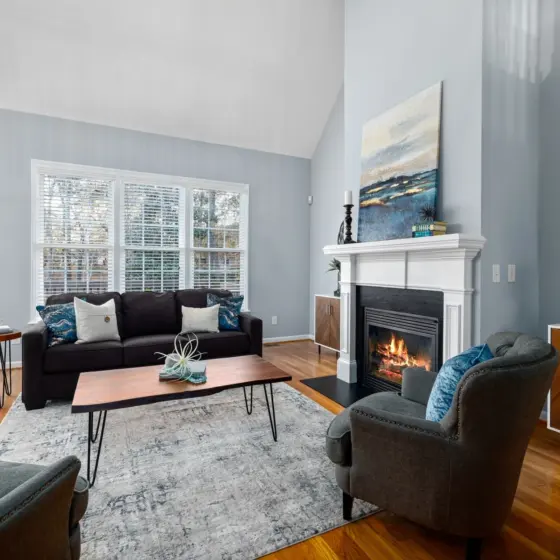
How to choose a rug size comes down to furniture: in an average living room an 8×10 rug is the usual standard, with at least the front legs of the sofa and chairs resting on it. Tape the outline first.
For the wider picture on choosing pieces for a room, see our furniture buying guide, and browse our interior design articles for room planning more broadly.
How rug size shapes a room
An area rug marks out a zone, so its size has to follow the furniture standing on it. A rug that is too small can look lost and leave the space feeling disjointed, according to The Rug Company. In a living room, designer Becki Owens goes further: anything under 8×10 tends to make the room feel smaller and often awkward.
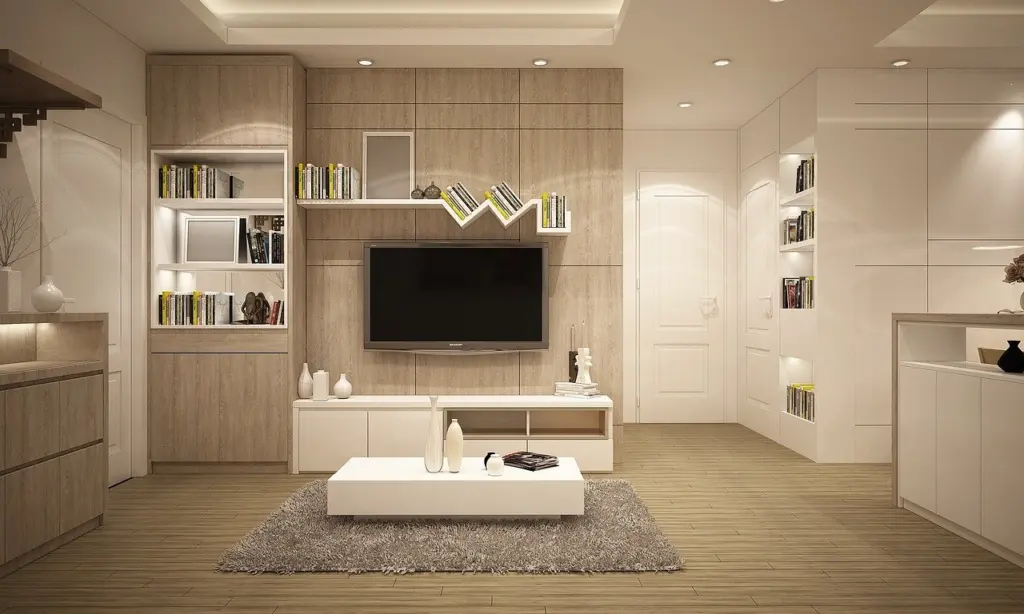
That is why the decision runs in a fixed order. Each stage narrows the options left by the one before it.
- Furniture footprint. Decide whether the sofa, chairs or table legs sit fully on the rug, partly on it or off it. This sets the minimum size.
- Wall border. Leave visible floor around the rug. This sets the maximum size.
- Movement. Check that chairs, recliners and doors still work over the rug edge.
- Tape test. Mark the result on the floor before ordering.
Rug size by room at a glance
| Room or situation | Size or rule | Planning use |
|---|---|---|
| Compact or layered living space | 5×8 rug | Suits a small seating area, or a rug layered over another one. |
| Average-sized living room | 8×10 rug | The default starting point for a standard sofa-and-chairs layout. |
| Expansive living room | 9×12 and larger | Needed when furniture is spread out and should still feel connected. |
| Sofa with all legs off the rug | At least as wide as the sofa, ideally 1 to 2 ft wider | Keeps the rug from looking narrower than the seating. |
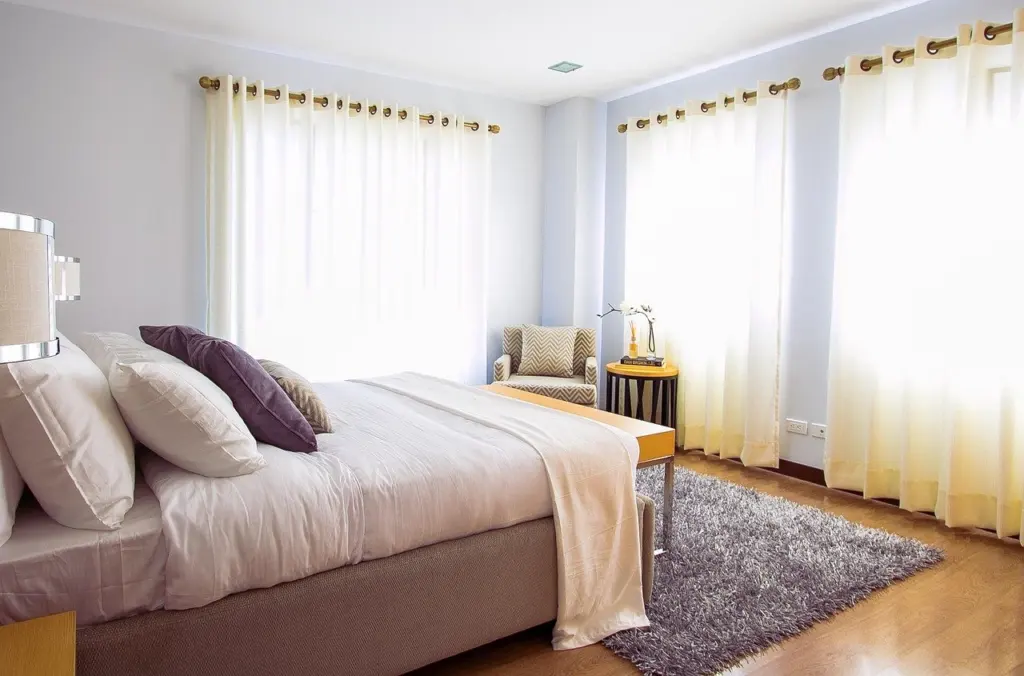
| Bedroom, rug under the bed | Extends at least 12 to 24 inches on each edge of the bed | Gives a rug visible on both sides and at the foot. |
| Bench or ottoman at the bed end | At least 12 inches of rug beyond it | Stops the bench from sitting on the rug’s edge. |
Size categories come from Designer Rugs and Carpet, and the sofa and bedroom figures from the Porch & Co area rug guide.
Living room layouts
Front legs on, all legs on or all legs off
The most flexible layout puts the front legs of the sofa and side chairs on the rug and leaves the back legs off, as Designer Rugs and Carpet describes. Becki Owens sets the same idea as a floor: at least the front two legs of the sofa and main chairs should be on the rug. For a medium room, that usually points to the 8×10 rug, which ties the seating together without covering the whole floor.
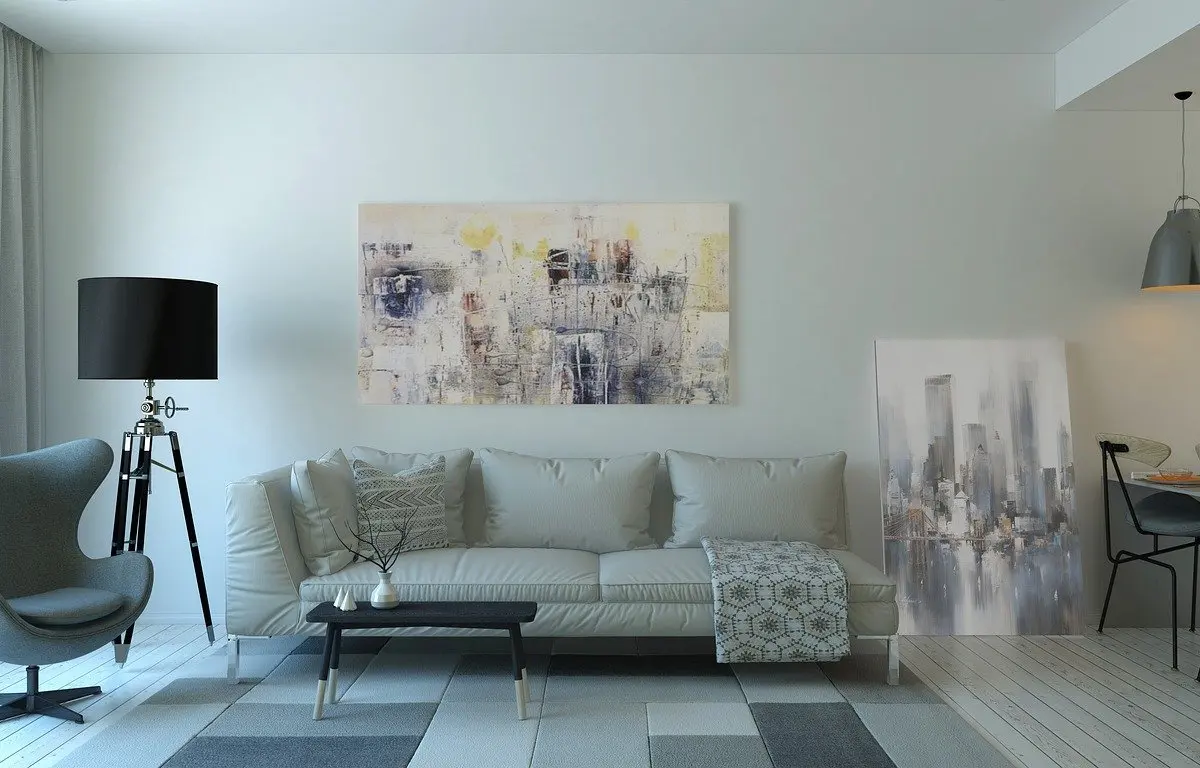
Putting every piece fully on the rug suits larger rooms and calls for a large rug designed for expansive rooms. Keeping everything off the rug suits a small room where only a modest rug fits. In that case the rug should be at least as wide as the sofa. The one rule that applies to all three layouts comes from Letifly: be consistent. Either all the pieces in the group are on the rug, or each has its front feet on it. A mix looks accidental.
Edge spacing and the coffee table
Within a conversation area, Letifly suggests about 8 inches from the furniture edges to the rug edge. Treat that as a working figure for tight seating groups, not a fixed rule. The coffee table sits inside the seating zone, so the rug should extend well past it. If you are still choosing that table, our guide to Wood And Metal Coffee Tables: Stylish, Durable Choices For Living Rooms In 2026 covers the options.
Wall borders and floor clearance
A rug that touches the walls reads as carpet, so leave floor showing. Guides give slightly different margins. Designer Rugs and Carpet recommends 18 to 24 inches in large rooms and says 8 to 12 inches is usually enough in smaller ones. Becki Owens sets a minimum border of at least 1 foot. Letifly wants at least 15 inches from each wall for a rug that fits the room.
The practical reading: in a large room, aim for the 18-to-24-inch band. In a small room, test the narrower end with tape, because a rug that fills the floor will make the room feel tighter. Letifly also gives a shortcut for a rug that fills most of the room: subtract 3 feet from both the length and width of the space.
Dining room rugs
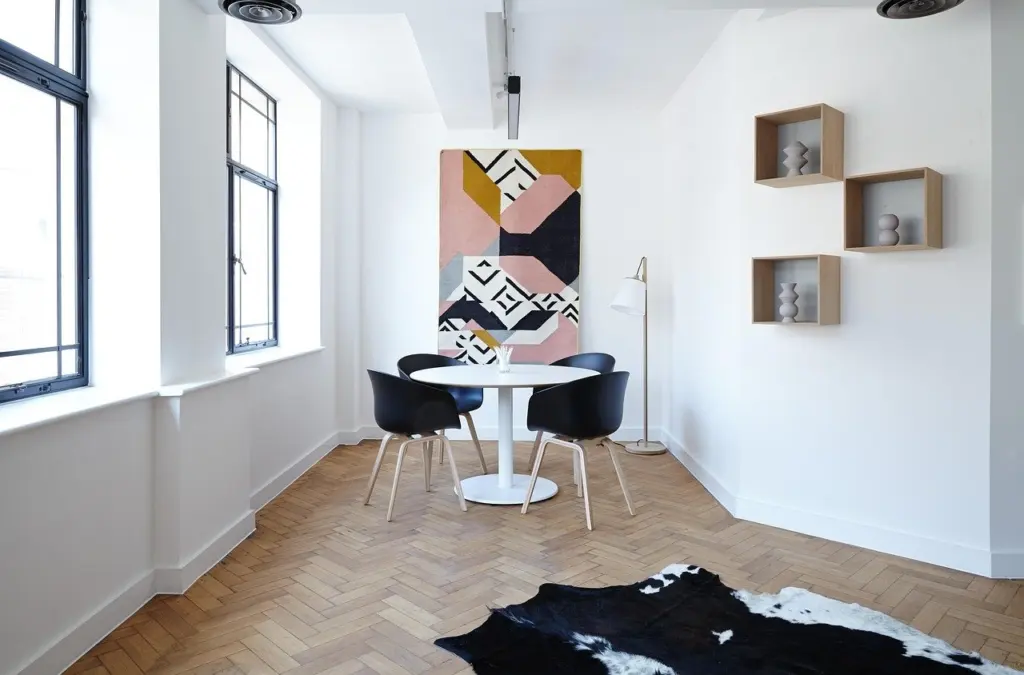
The question is how far a rug should extend past a dining table. Letifly answers with at least 24 inches from the edge of the table on all sides. The Rug Company expresses it as total size: at least 5 ft wider than the length and width of the table. If the floor allows, work from whichever figure gives the larger rug, since a generous rug is more forgiving once chairs are pulled back.
The rug should stay under the chairs whether they are pushed in or out. A rug sized to the table alone leaves the chair legs catching on the edge, and an undersized rug gives the dining area the lost look described earlier.
Bedroom rugs
A bedroom rug should be big enough to show on both sides of the bed. Within the 12-to-24-inch extension range, the Letifly guide gives about 24 inches of rug showing at each side of the bed as the generous end. Choose the lower end for a narrow room and the higher end where there is space to walk around the bed.
A bench or ottoman at the foot changes the calculation, because the rug has to continue at least 12 inches past it. If the bed itself is an antique iron frame, our valuation guide How Much Is My Antique Cast Iron Bed Frame Worth? A Practical 2026 Valuation Guide is worth reading before you plan the room around it.
Tape test before you buy
Both Designer Rugs and Carpet and Porch & Co recommend painter’s tape to mock up the rug on the floor before ordering. It is the cheapest way to catch a wrong size. Tape the candidate dimensions, move the furniture into its intended position, then check three things:
- Furniture contact. Do the front legs of the sofa and chairs land on the tape line or inside it, in the same way for every piece?
- Border. Is there visible floor on every side that matches the wall margin you chose?
- Walking paths. Can you walk between the seating and the doorway without stepping across the outline awkwardly?
If the tape feels cramped, move up a size. If it crowds the walls, drop one.
Frequently asked questions
What size rug for a living room if the room is large?
Move up from the 8×10 standard. Designer Rugs and Carpet lists 9×12 and larger as the sizes designed for expansive rooms, and the border to the walls can widen as the room grows.
Is a 5×8 rug ever right for a living room?
Yes, in compact spaces or when it is layered over another rug. In an average living room it is usually too small for the seating.
Do dining chairs need to stay on the rug when pulled out?
Yes. The Rug Company advises a rug large enough that the back chair legs do not catch on its edge when someone sits down or stands up.
Do recliners and doors affect rug size?
They do. Designer Rugs and Carpet says recliners, swivel chairs and doors should operate freely without catching the rug’s edge, so check them during the tape test.