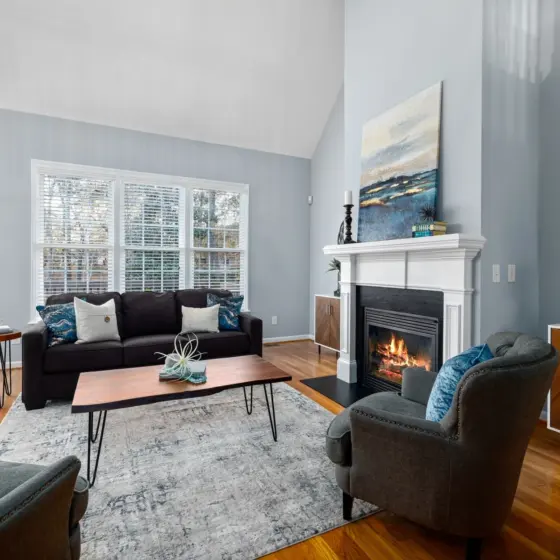
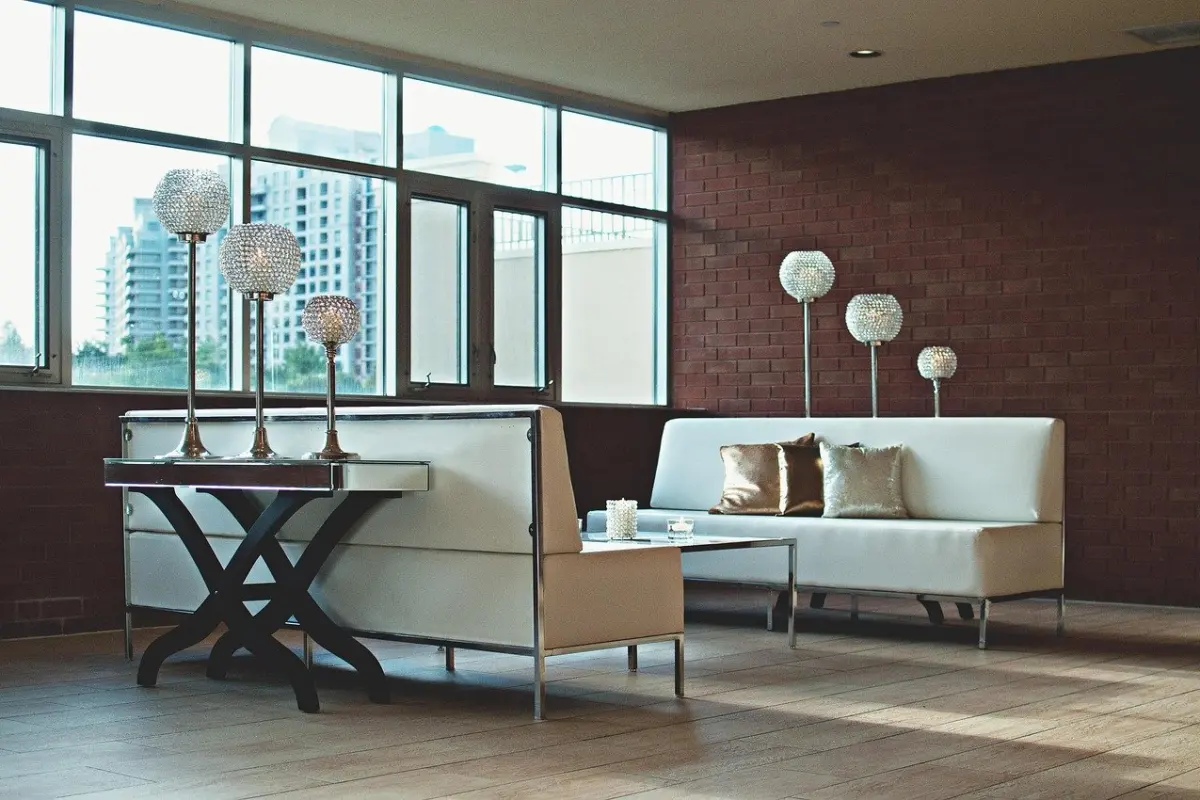
A bare brick wall, a steel-framed window and a filament bulb prompt the question: what is industrial interior design? It is the preservation or incorporation of industrial elements in a home or commercial space, usually in raw materials and a neutral palette.
The most common misreading is that the look needs a converted factory, a gray-only palette or a shabby finish. None of those is required. If you are still choosing between styles, our interior design basics for beginners puts this one in context.
Industrial style defined, and what it is not
Fireclay Tile describes industrial style as keeping or bringing industrial elements into a residential or commercial space. The usual signs are open plans, exposed brick and pipes, concrete floors and a neutral palette. Upscale adds unrendered brick walls, exposed concrete, and steel columns with visible beams to that list.
The original version was deliberately unfinished. Raw materials were used for walls, floors and installations, and surfaces were often left untreated or half-plastered, so the whole living area looked “unfinished”. The term has since widened. It now also covers more polished, luxurious interiors that keep only a few typical elements. That is why two rooms can both be called industrial and look quite different.
The table sets the common assumptions against what the style involves.
| Common assumption | What the style involves | Planning use |
|---|---|---|
| It needs a real factory loft | The look can be applied in an ordinary home without an expensive remodel or high investment | Start with surfaces, furniture and fixtures before considering construction work |
| Everything must look raw and unfinished | Original interiors leave materials untreated, but the term now includes polished interiors that keep a few typical elements | Decide how raw you want the room; a few strong elements can carry it |
| The palette is only black and gray | A largely neutral palette balances warm tones, such as wood and copper, against cool grays and stark whites | Plan warm and cool neutrals together so the room does not feel cold |
| Shiny chrome fits the metal theme | Original interiors use ungalvanized pig iron or matte stainless steel rather than high-gloss chrome | Choose matte or aged metal finishes for shelving, frames and hardware |
The assumptions and corrections above come from Upscale magazine and HomeLight.
A home without original brick or concrete suits the pared-back version best. Because the term now covers interiors that keep only a few typical elements, you do not need a full set of raw surfaces for the room to read as industrial.
Where industrial design came from
Factory buildings and the first lofts
HomeLight traces the style’s roots to factory buildings of the 18th and 19th centuries, and classes contemporary industrial interior design as essentially a 20th century movement. Planner5D puts the underlying cause simply: the look was born out of necessity, as industrialization led to the mass production of goods.
The domestic version started with the loft. According to Upscale, lofts were first set up in the 1940s in England and the USA, inside old, vacant factory buildings that offered inexpensive living space.
From artists’ studios to a mainstream look
The housing concept became fashionable from the sixties, first among artists and students who used old factory floors as studios and homes. Industrial interior design then grew in popularity through the latter part of the 20th century. Factories and warehouses shut down during the rise of globalization were converted into housing and retail space.
Raw finishes make sense against that background, because the buildings were reused much as they stood. It also shows that the style is not a recent trend that happens to borrow factory props.
Materials and color palette
Industrial materials are chosen for what they are rather than for how they can be disguised. These are the main ones and their typical uses:
- Exposed brick: Unrendered brick walls are a signature feature. HomeLight notes that brick retains heat, helping keep spaces warm in colder months and cooler in hotter temperatures.
- Concrete: Suited to floors, counters and kitchen islands. It is durable and develops a warm patina over time. Exposed concrete walls and ceilings are also a typical feature.
- Steel and other metals: Steel columns and visible beams show the structure. Keep metal finishes matte, in line with the ungalvanized pig iron or matte stainless steel described by Upscale.
- Reclaimed wood: Wood adds an organic feel to stark spaces. In furniture, reclaimed wood combined with wrought iron or stainless steel is, according to Fireclay Tile, a hallmark of industrial furniture design.
Patina is part of the appeal here. The same Fireclay Tile source lists rust, oxidization, distressed leather and visible paint layers as accepted signs of age. Choose surfaces you are happy to see change, because the style rewards wear rather than hiding it.

Color palette
The palette follows the materials. Sewn Drapes and Shades traces charcoal grays to concrete, chalky whites to plastered walls, and black and steel accents to the metalwork, with honeyed tans and deep browns coming from wood and leather. Accents such as rust, burnt orange, mustard and deep blue sit comfortably on that base. Treat the neutrals as the background and keep the accents few.
Windows and lighting
Large windows are a defining feature. Original factory windows were made of steel and aluminum and were big so that people working inside had light. The grid pattern comes from the metal dividers, called muntins, that join the panes, as HomeLight explains. Tall windows and open layouts are core to the style, so steel windows are worth keeping or imitating if you want the room to read as industrial.
For lighting, Edison bulbs are the usual choice. They are typically used without shades or covers because their beauty is in their form. A bare filament in a metal fixture suits the same logic as the matte metals and exposed structure around it.

Applying the style at home
Upscale makes the point that neither an expensive remodel nor a high investment is needed to turn a featureless living room into an industrial one. These steps keep the work in a sensible order:
- Audit what you already have. Note any brick, concrete floors, steel windows or visible beams, and leave them uncovered.
- Decide how raw the room should be. If the building supplies few raw surfaces, carry the look through furniture and fixtures instead, since a few typical elements are enough.
- Fix the neutral base first. Balance warm woods and copper against cooler grays and whites, then add a restrained accent color.
- Match your metals. Keep shelving, frames and hardware matte or aged, and pair reclaimed wood with iron or steel in furniture.
- Light it honestly. Use filament bulbs in metal fixtures, left unshaded.
- Accept wear. Pick finishes that age with patina rather than chasing a uniform, showroom look.
The same logic carries over to commercial work; Industrial Office Interior Design: How To Create Functional, Stylish Workspaces In 2026 applies it to workspaces. If you want a bedroom that leans moodier than raw gray, Modern Dark Academia Bedroom: How To Create a Moody, Timeless Sanctuary In 2026 takes a different route to dark, textured rooms.
Frequently asked questions
| Question | Answer |
|---|---|
| Is leather part of industrial style? | Yes. Leather and linen upholstery are preferred for comfort and for the graceful patina they develop over time. Leather couches only became widely available to the public in the 19th century, as HomeLight notes. |
| Which colors should I avoid? | Avoid overly showy, opulent or delicate colors such as gold, pastels and rich jewel tones, according to Sewn Drapes and Shades. |
| How long do Edison-style bulbs last? | Modern Edison-style bulbs are advertised as lasting up to 15,000 life hours, per HomeLight. That is a vendor claim rather than a guarantee, so check the packaging of the bulb you buy. |
| Can I dress steel windows with curtains? | Yes, if the dressing frames the window without hiding it. Textured linen or cotton curtains, or linen roman shades, let the steel frames stay visible, as Sewn Drapes and Shades suggests. |