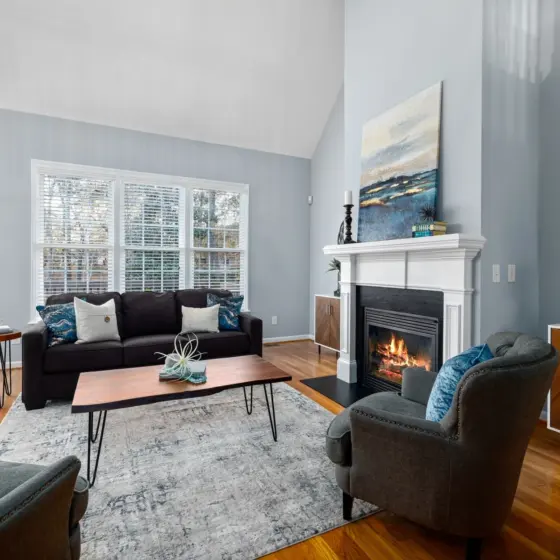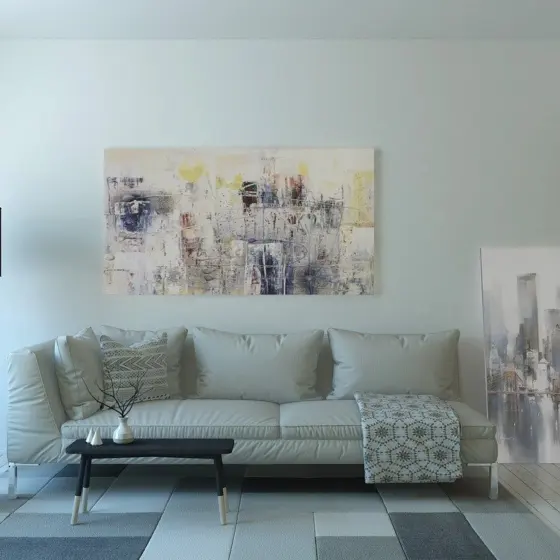
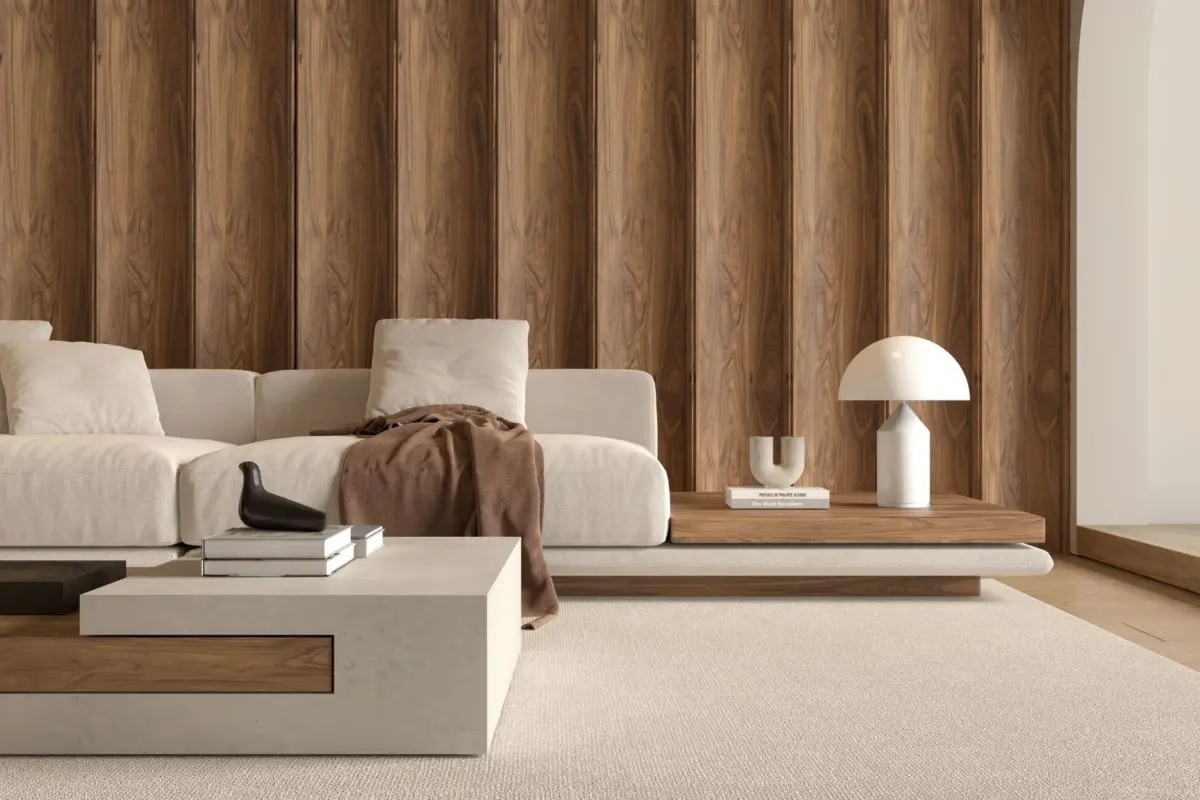
| Element | Supported detail | Planning use |
|---|---|---|
| Base colour | Off-white, cream or stone gray; sand, oatmeal and beige instead of stark white | Choose a single warm base for walls and large surfaces before buying anything else. |
| Wood | Light or medium-toned oak, ash or walnut with a matte or raw finish | Match wood tone across the table, shelving and frames so the room reads as calm. |
| Upholstery | Linen or cotton in beige, light gray or taupe | Keep the sofa fabric neutral and let cushions and throws carry the texture. |
| Seating form | Furniture close to the ground; sofas streamlined and structured, with no oversized arms | Reject bulky, plush silhouettes in the shop, however comfortable they look. |
| Lighting | Paper, bamboo or rattan pendants; warm floor lamps and sconces in place of harsh ceiling lights | Plan lamps at several points in the room rather than relying on one overhead fitting. |
| Textiles | Wool throws, linen cushions and woven rugs | Add warmth through a few tactile layers instead of many small decorative objects. |
These details come from Fujioh’s Japandi living room guidance and furniture.co.uk’s style guide.
A japandi style living room pairs Japanese minimalism with Scandinavian functionality: a neutral base, natural wood, low furniture and soft, layered light. The main condition is restraint with warmth, so the room never feels bare.
If you are new to planning rooms, start with our interior design basics for beginners, then use this guide to turn the style into a palette, a furniture list and a lighting plan.
Colour palette decisions
A neutral palette suits Japandi best, built on warm tones rather than cold white. One furniture journal describes warm beiges, taupes and soft greys balanced with grounding tones such as charcoal, walnut or deep olive green. Because the base is quiet, the way you place the darker tones decides how the room feels.

- Base: choose off-white, cream or stone gray for the walls. If you want to avoid stark white, sand, oatmeal and beige are the muted alternatives.
- Grounding tones: charcoal, walnut or deep olive green anchor the base. They belong on a few items such as a side table, a frame or a cushion, not on every surface.
- Layered colour: sage green, clay, sand and charcoal can be added over the neutral base, as Fujioh suggests. Pick from this list rather than adding every shade.
- Drama: charcoal grey or navy blue gives depth if the room needs more contrast. It suits a living room with plenty of daylight, where the darker colour will not close the space in.
- Softer accents: dusty pink, pale blue or seafoam green work if you prefer a gentler look than charcoal.
The practical consequence is that a short, repeated colour list makes the room look planned. Choose the base and the accents before you buy the sofa, since the sofa is the largest colour block you will add.
Furniture and materials shopping plan
Buy the largest pieces first and the small ones last. The sofa is often the largest piece in the room, so it sets the pace for the table, storage and textiles that follow. Before you commit, decide how to plan a room layout so low seating and open floor space both fit.
Low-profile sofa and seating
Furniture in a Japandi room tends to sit close to the ground. A low-profile sofa should be streamlined, structured and functional, with no oversized arms or plush, bulky silhouettes. For fabric, choose neutral linen or cotton in beige, light gray or taupe. Linen is the entity to look for first, because it takes the Scandinavian-inspired sofa and the Japanese-inspired low table into one calm pairing.
- Choose a structured frame if you want a clean outline. A slumped, over-stuffed sofa works against the low, horizontal look.
- Keep the fabric plain and add pattern elsewhere. Neutral upholstery lasts longer than a trend colour.
- Pair it with a low wood table. A linen sofa beside a low table is a pairing that suits both sides of the style.
Oak and other woods
Natural materials such as wood help bring the look to life. Look for light or medium-toned woods such as oak, ash or walnut, with a matte or raw finish. Oak is the safest all-round choice for a coffee table or shelving because its tone sits comfortably with the beige and cream bases above. Walnut is a better fit if you want a darker accent that echoes the grounding tones in the palette.
A room leaning toward darker, rougher timber and metal belongs to a different look, covered in Rustic Industrial Interior Design: How To Create Warm, Edgy Spaces In 2026. Japandi keeps its wood lighter and its finishes quieter.
Storage that stays out of sight
Hidden storage is the practical tool for keeping a Japandi room clean and serene. Choose cabinets, lidded boxes or closed shelving units over open shelves full of small objects. If you do keep a shelf open, limit it to a few considered items so the room stays visually calm.
Warmth through textiles and light
Warmth in a Japandi room comes from texture and light, not from ornament. Fujioh recommends textured textiles such as wool throws, linen cushions and woven rugs. They add comfort without adding colour, which keeps the neutral palette intact.
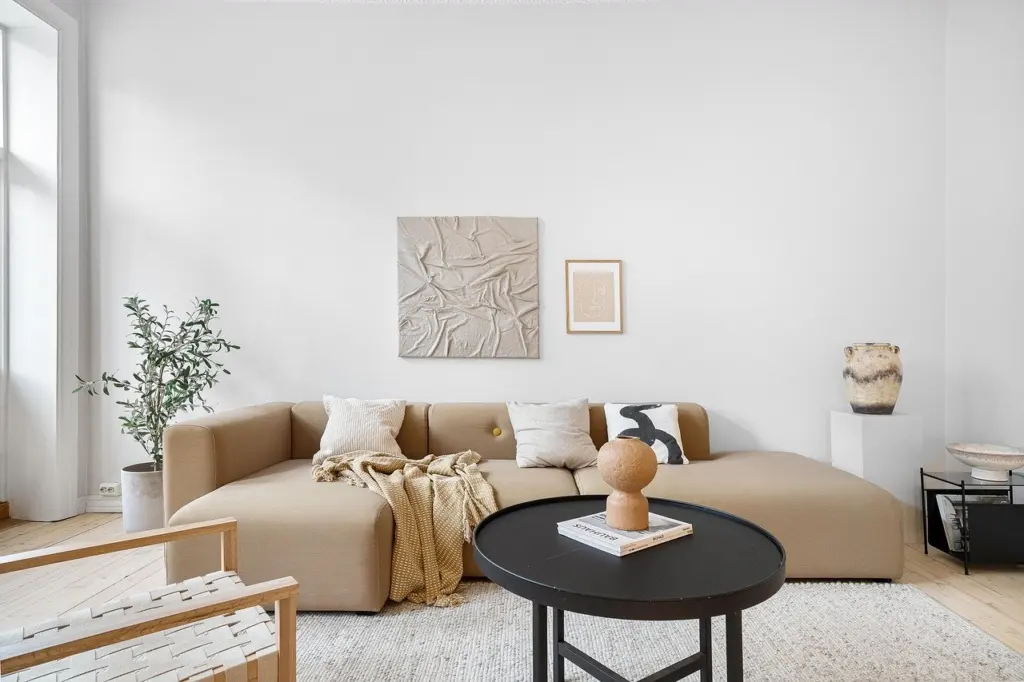
Lighting matters just as much. Japanese paper lanterns add a diffused, ethereal quality that enhances the room’s softness and serenity. For pendants, choose natural materials such as paper, bamboo or rattan, and avoid cold white overhead light. A paper lantern or pendant over a table gives the room a soft glow where the table sits.
- Replace the harsh ceiling light. Warm floor lamps and sconces cast a golden glow across the room, which is what makes low seating feel inviting.
- Add handmade texture. Rice paper light fixtures, woven baskets and handcrafted ceramics add depth and authenticity.
- Use candlelight at dusk. Candles and low seating that invites you to settle in create the hygge feeling described by All Cotton and Linen.
These choices answer the question of how to add warmth without clutter. Add a layer of fabric or a source of soft light rather than another decorative object.
How the Japanese and Scandinavian sides combine
Japandi is a fusion of Japanese and Scandinavian aesthetics that blends minimalism, warmth and nature-inspired beauty, according to Casa Zuma’s design journal. Designer Leni Calas, quoted by furniture.co.uk, defines it as the combination of Scandinavian functionality and Japanese rustic minimalism.
The two sides contribute different ideas, and understanding them helps you decide what to keep or leave out:
- The Japanese side draws on wabi-sabi, which finds beauty in imperfection and values simplicity and contentment. In practice, this is why raw wood finishes, handmade ceramics and slightly irregular textures belong in the room.
- The Scandinavian side draws on hygge, a mood that is cosy, comfortable and content. This is why the style leans on soft textiles, warm lamps and seating you actually want to sit in.
The result is neither purely Japanese nor purely Scandinavian. A Japanese-only room may lean harder on emptiness, while a Scandinavian-only room may lean harder on cosiness. Japandi keeps the function and comfort of one and the calm restraint of the other, so a good test for any purchase is whether it is both useful and quiet to look at.
Frequently asked questions
Which countries does Scandinavia include in the name Japandi?
Scandinavia refers to Denmark, Norway and Sweden. Finland and Iceland are sometimes included as well.
Is Japandi the same as minimalism?
Not quite. All Cotton and Linen describes Japandi as minimalism with warmth: never sparse, never cluttered, always considered. The warmth is what separates it from a plain, empty look.
Can Japandi suit a family home or a small apartment?
Yes. Fujioh advises choosing furnishings that suit your lifestyle: modular seating for a family and smart storage for small apartments.
Which natural fibres can I use besides linen?
Bamboo, rattan, paper and cotton all bring natural texture. Cotton and linen are an easy way to add a touch of nature, while bamboo, rattan and paper work well for lighting.