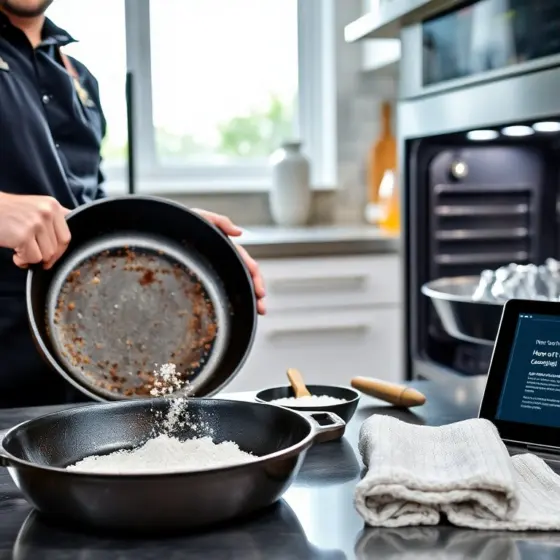
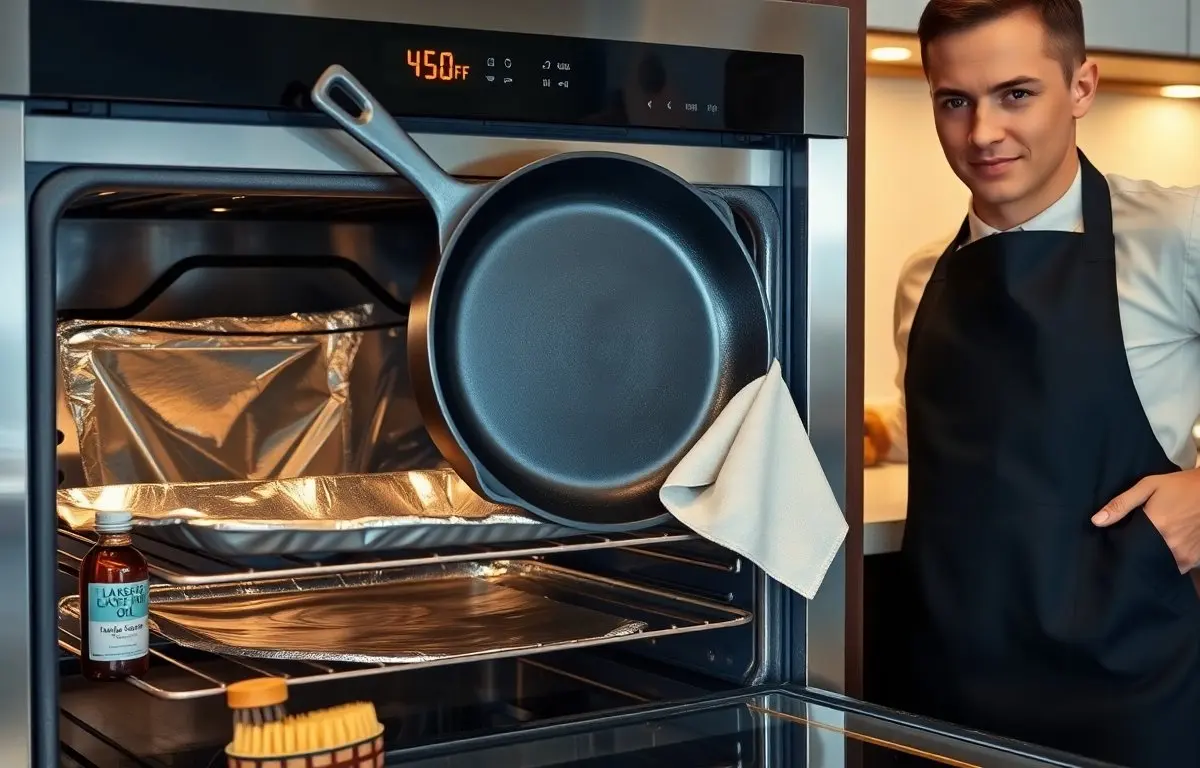
How to season cast iron in oven matters for anyone who cooks with cast iron. This guide shows clear steps to season cast iron in oven, with tools, temps, and timing. It explains why to season cast iron in oven and when to re-season. The instructions use simple verbs and clear measures. The reader will learn a repeatable routine that keeps pans nonstick and long lasting.
Key Takeaways
- Season cast iron in oven to build a durable, nonstick layer that prevents rust and food sticking.
- Preheat the oven to 450°F, apply a thin layer of high smoke point oil, and bake the pan upside down for one hour to season cast iron in oven effectively.
- Use flaxseed, grapeseed, canola, or vegetable oil sparingly and wipe off excess to avoid sticky patches during seasoning.
- Re-season cast iron in oven when the pan looks dull, sticky, or after heavy cleaning, and complete multiple cycles for new pans to ensure a strong finish.
- Avoid common mistakes like over-oiling or baking at too low temperature by following precise oil amount and heat guidelines.
- Perform regular care by washing with hot water, drying thoroughly, and lightly oiling after use to maintain the pan’s nonstick surface.
Why Season Cast Iron And When To Re-Season
Season cast iron in oven to build a hard, nonstick layer. Oil bonds to the metal when heat turns oil into a thin polymer film. This film prevents food from sticking and stops rust. Users should season cast iron in oven when the pan looks dry, dull, or if food begins to stick. They should also season cast iron in oven after removing rust or after heavy scrubbing. New pans often need an initial oven seasoning. A simple sign that the pan needs re-seasoning includes sticky spots or uneven color. If the pan has a strong metallic smell during cooking, they should season cast iron in oven again. Regular light use may need a full oven seasoning every few months. If they cook acidic foods often, they should watch the finish and season cast iron in oven more often.
Step-By-Step Oven Seasoning Method (Tools, Temps, And Timing)
Preheat the oven to 450°F to 500°F. Clean the pan with hot water and a stiff brush. Dry the pan completely with a towel and by heating it on the stove for a few minutes. Apply a thin layer of oil to the entire pan, inside and out. Place the pan upside down on the middle rack. Put a foil-lined sheet on the lower rack to catch drips. Heat the oven at 450°F for one hour. Turn off the oven and let the pan cool inside the oven until cool to the touch. Repeat the process two or three times for a stronger finish. For new pans, complete three cycles. For maintenance, one cycle often suffices. Use the target keyword naturally during steps: how to season cast iron in oven often requires thin oil layers and steady heat. This step list helps the reader follow a timed routine for consistent results.
Detailed Application Tips: Oil Types, How Much To Use, And Rack Placement
Choose an oil with a high smoke point. Flaxseed oil, grapeseed oil, canola oil, and vegetable oil work. Flaxseed oil forms a hard layer. Grapeseed and canola provide reliable results and cost less. Use only a teaspoon to a tablespoon of oil for a standard skillet. Rub the oil into the metal with a lint-free cloth. Wipe away visible excess so only a thin film remains. Place the pan upside down on the middle rack to let drips fall away. The foil on the lower rack will catch any runs. If the oil smokes heavily during the first cycle, lower the oven by 25°F next time. If the finish smells bad after seasoning, the layer may be too thick: remove it by scrubbing and start again. Test the finish by frying an egg. If food sticks, add another short seasoning cycle. Follow the guide on how to season cast iron in oven to avoid common errors like over-oiling or underheating.
Common Mistakes, Troubleshooting, And How To Fix Sticky Or Uneven Seasoning
A common mistake is using too much oil. Heavy oil pools and forms sticky patches. The fix is to scrub with hot water and a brush, dry the pan, and repeat a thin oven seasoning. Another mistake is baking at too low a temperature. Low heat keeps the oil from polymerizing and leaves a tacky film. The fix is to raise the oven to at least 425°F and rerun a full one-hour cycle. Uneven color often means uneven oil. Sand the pan lightly with fine steel wool, clean, dry, and apply an even thin coat before re-seasoning. If rust appears, remove rust with steel wool, clean the pan, dry it, and season cast iron in oven immediately. If the finish flakes, the layer may be old or contaminated: strip the pan to bare metal and repeat initial seasoning cycles. Use the keyword in context: how to season cast iron in oven helps correct these errors by setting clear oil and heat rules.
Everyday Care After Seasoning To Preserve The Nonstick Surface
After seasoning, wash the pan with hot water and a soft brush. Do not use soap often. If the reader uses soap, they should keep it light. Dry the pan fully after washing. Heat the pan on the stove for a minute to drive off moisture. Apply a drop of oil and wipe the surface thinly after each use if the pan looks dry. Store pans in a dry place. Stack pans with a paper towel between them to protect the surface. For stuck food, soak briefly in warm water and use a gentle scrub. Avoid long acidic cooks that can wear the finish: if they cook tomatoes often, they should check the pan and season cast iron in oven when the finish dulls. With simple daily care, the reader will keep the nonstick layer working for years.