How to season a cast iron skillet on the stovetop is a quick method anyone can use. This guide shows clear steps, required items, and simple tips. It helps the reader build a nonstick layer that lasts. The instructions use common oils and safe heat levels. The reader will learn when to choose stovetop seasoning and how to avoid common mistakes.
Key Takeaways
- Seasoning a cast iron skillet on the stovetop creates a durable nonstick layer by bonding oil to the iron through controlled heat.
- Use high smoke point oils like grapeseed or avocado oil for best results when seasoning your cast iron skillet on the stovetop.
- Stovetop seasoning is ideal for quick touch-ups, small rust spots, or when oven access is limited, providing a usable pan the same day.
- Apply oil in thin layers, heat the pan at medium-high, then medium heat, and repeat the cycle 3 to 6 times to build a strong seasoning layer.
- Maintain the skillet by cleaning with hot water, drying on low heat, and lightly oiling while warm to avoid rust and sticky spots.
- Address uneven or sticky seasoning by scrubbing gently and repeating the stovetop seasoning process to restore an even finish.
Why Stovetop Seasoning Works And When To Use It
Stovetop seasoning works because heat bonds oil to the iron. Heat changes the oil molecules. The oil forms a hard, dark layer on the surface. The layer repels water and food. People choose stovetop seasoning when the pan has small rust spots or a thin finish. They pick this method for quick touch-ups after scrubbing. They avoid oven seasoning when the cast iron is large or when the oven is full. The stovetop method also works when a single burner can reach steady high heat. Home cooks get a usable pan the same day. They can repeat the process until the surface darkens evenly.
What You Need: Tools, Oils, And Prep Steps
The reader needs a few tools for stovetop seasoning. They need a clean cast iron skillet, a heat source, an oil with a high smoke point, paper towels, tongs, and a metal spatula or stiff brush. Recommended oils include grapeseed oil, avocado oil, or refined sunflower oil. The oils have smoke points above 400°F. The reader needs no special gear beyond a burner and a rag. They should ventilate the kitchen when they heat oil. They should remove stickers and labels first. They should scrub loose rust with steel wool if needed. They should dry the pan fully with heat before applying oil.
Step-By-Step Stovetop Seasoning Method
Initial Cleaning And Drying
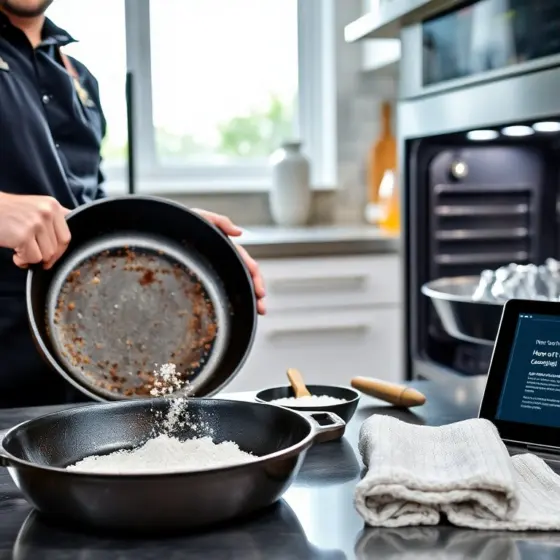
The cook inspects the pan for rust, food bits, and stuck-on residue. They scrub the surface with hot water and a stiff brush. They use mild dish soap only if the pan needs deep cleaning. They rinse thoroughly. They heat the pan on medium until water droplets evaporate. They dry the pan with a towel and then heat it for a minute to drive out any moisture.
Applying Oil And The Heating Process
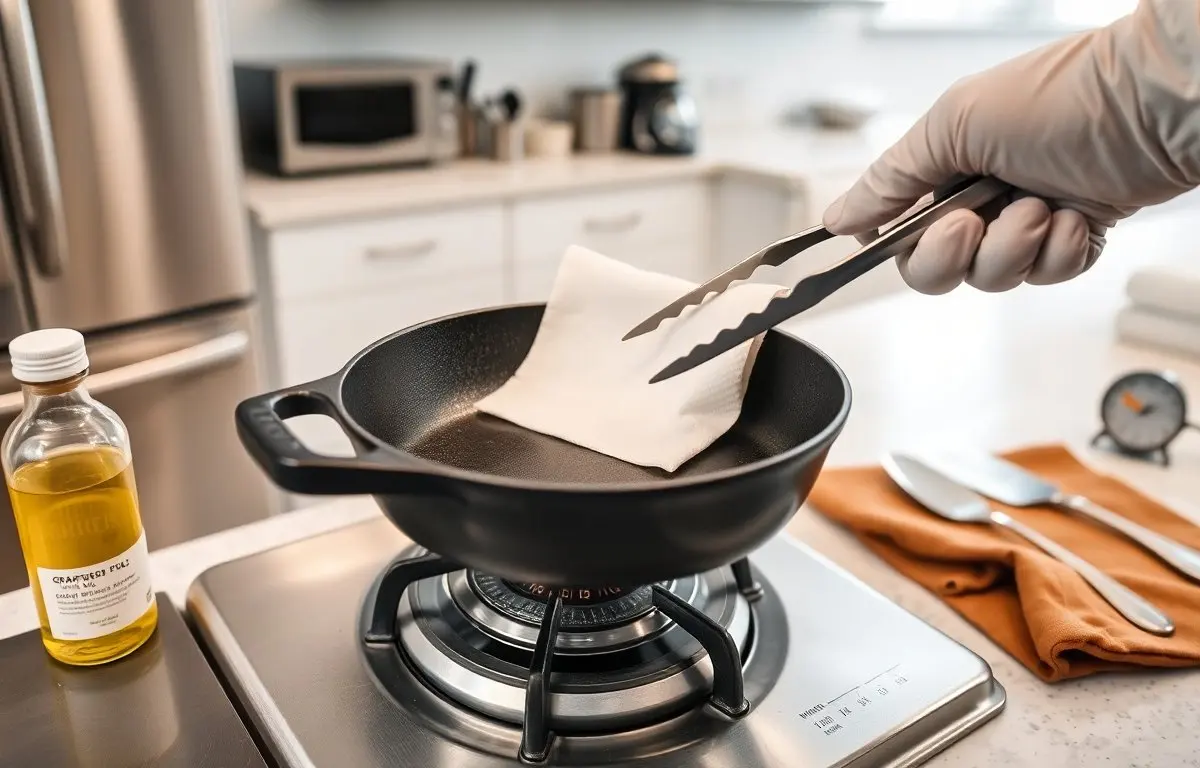
The cooker pours a teaspoon of chosen oil into the pan. They spread the oil with a paper towel so the layer covers the whole surface thinly. They hold the towel with tongs to avoid burns. They set the burner to medium-high. They place the pan on the hot burner and let it heat for four to six minutes. They watch for thin smoke and a darkening of the oil. When the oil stops forming large smoke, they lower the heat to medium and keep the pan there for two more minutes. The oil should polymerize into a thin sheen rather than pool.
Cooling, Wiping, And Repeating For A Strong Layer
They remove the pan from heat with a pot holder. They let the pan cool for five minutes until it is warm but safe to touch with a paper towel. They wipe away excess oil with a clean towel. They inspect the finish and repeat the apply-heat-cool cycle three to six times. Repeating builds a thicker, durable layer. The cook avoids adding thick oil blobs. They keep each oil layer thin. They let the pan cool fully before stacking or storing.
Maintenance And Troubleshooting Common Problems
The owner maintains a seasoned pan with simple habits. They clean the pan with hot water and a brush after use. They dry the pan on low heat and rub a thin oil layer while it is warm. They avoid soaking the pan in soapy water for long periods. If food sticks, they add more thin seasoning layers on the stovetop. If the pan shows sticky or uneven spots, they scrub with a nylon brush and repeat the stovetop seasoning cycle. If the pan develops rust, they remove rust with steel wool, dry the pan, and apply the stovetop method multiple times. If the pan smokes heavily during seasoning, they switch to a higher smoke point oil and lower the heat. If the finish turns blotchy, they keep repeating light oil and heat cycles until the color evens out. Regular light maintenance prevents major repairs. The cook checks the pan before each use and adds one quick stovetop seasoning when needed.