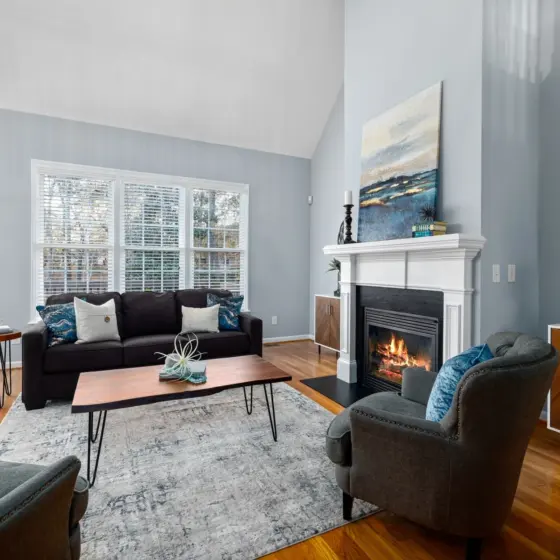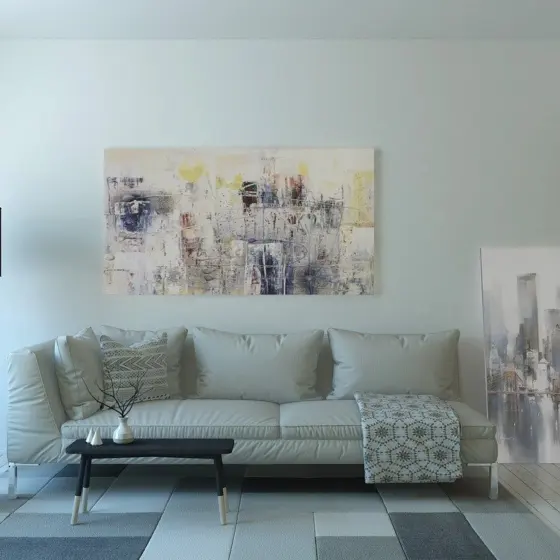
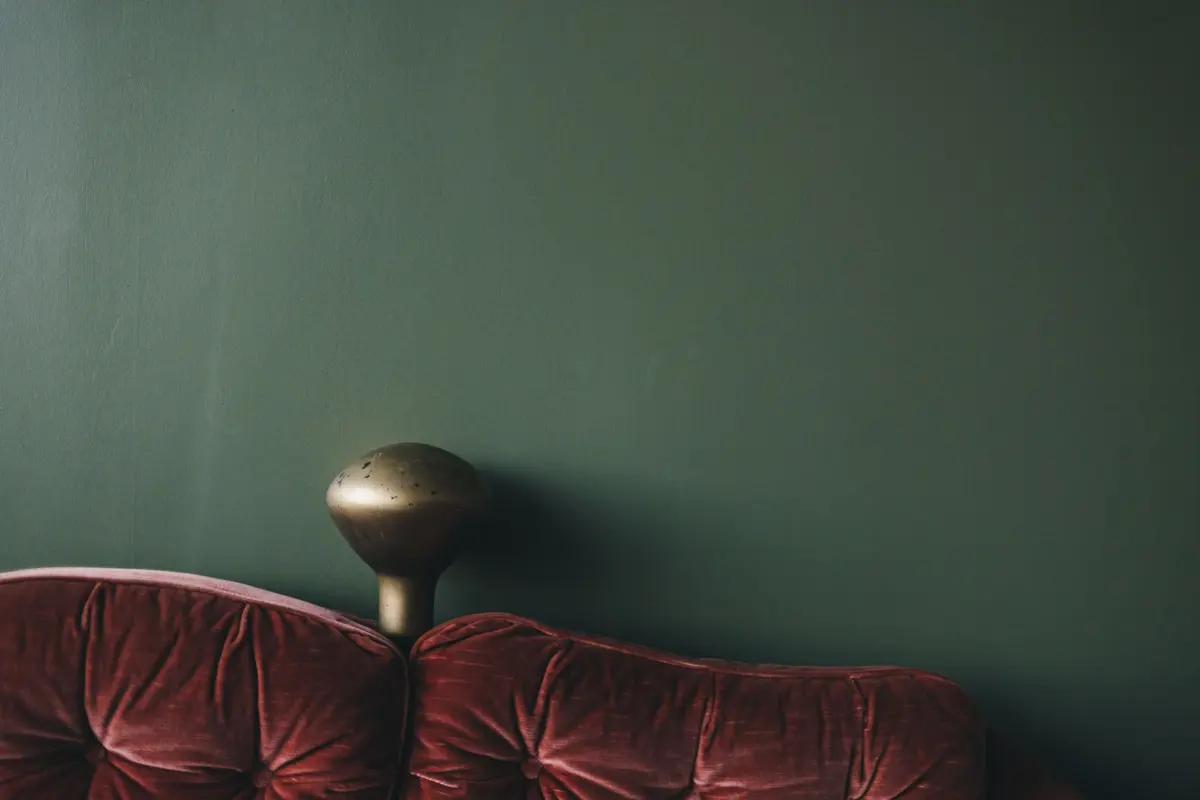
A cozy moody living room pairs deep, warm paint with layered lamplight and varied textures. Test the color in your own light first, and keep the overhead fixture on a dimmer.
If you are still building a style from scratch, interior design basics for beginners sets out the principles this look relies on.
How a moody room becomes cozy
Dark color creates the enclosed, sheltering feeling, and light and texture make that feeling comfortable. White Oak & Linen attributes the cozy character of dark living rooms largely to the dark paint itself. Benjamin Moore adds that rich, moody colors can make a room feel larger by creating an illusion of depth and softening the edges of the room.
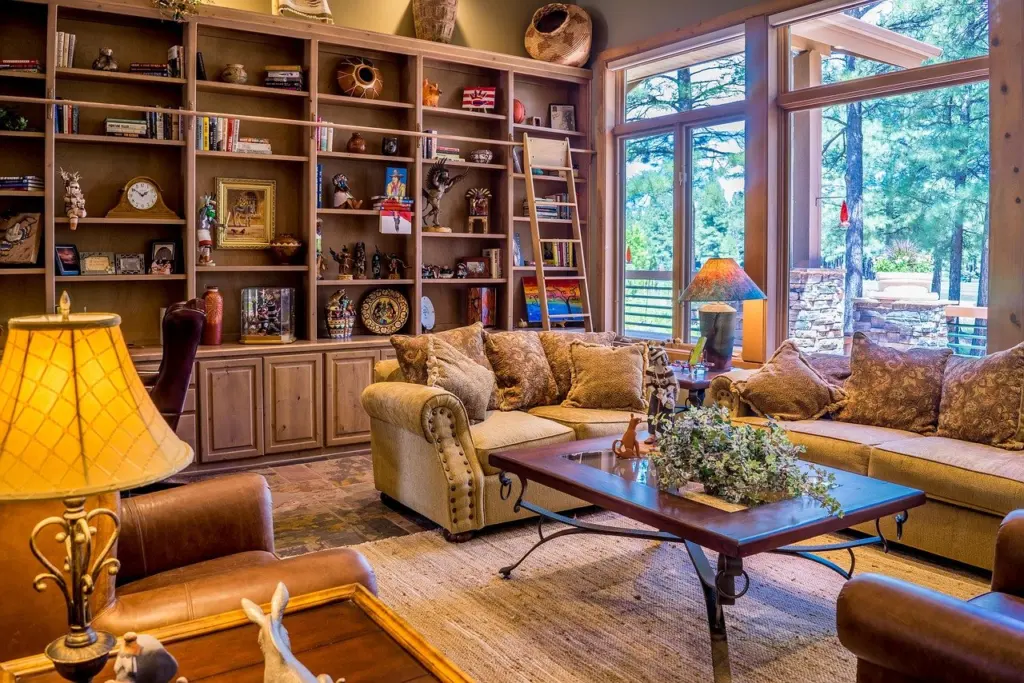
Paint is only the starting point. Living Large in a Small House makes the case that moodiness is about intention, not just pigment, so lighting and layered texture have to carry as much weight as the wall color. A typical recipe, as The Coolist describes it, combines deep charcoal walls, velvet sofas, warm lighting and dramatic accents.
That points to a sensible order of work:
- Color first. Choose and test the wall color before buying anything else, because every other choice responds to it.
- Light second. Build the lamp layers so the room glows after dark instead of looking merely dim.
- Texture third. Add soft and natural materials that stop dark walls from reading flat.
- Layout last. Use mirrors, palette discipline and pattern to keep the room open.
Choosing deep paint colors
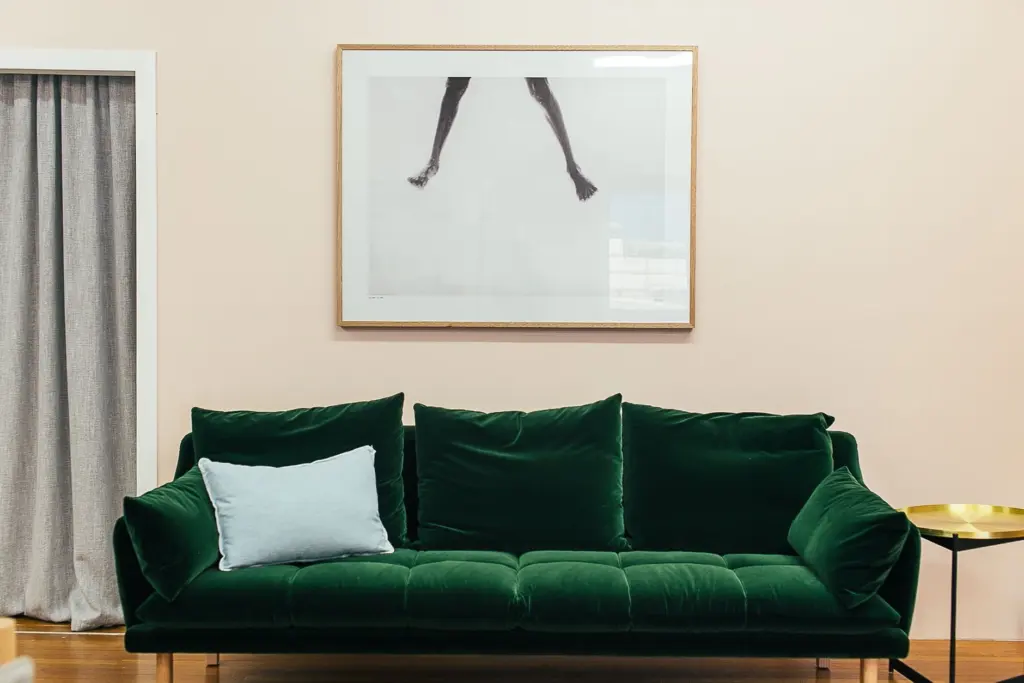
The best moody colors are saturated and deep, and their undertone decides whether the room feels calm or dramatic. Benjamin Moore names jewel tones as a core moody family, including Shadow 2117-30, an amethyst purple, and Beau Green 2054-20, an emerald green. Caribbean Azure 2059-20 is its sapphire blue example. The brand also lists Barberry 1244, Weimaraner AF-155, Antique Pewter 1560 and Vintage Vogue 462 among its popular moody colors, so compare those with a sample on your own wall before choosing.
| Undertone family | Benjamin Moore example | How it reads | Planning use |
|---|---|---|---|
| Purple and red | Shadow 2117-30 (amethyst purple) | Warm and theatrical | Suits a room where you want drama; velvet and dim lamplight reinforce it. |
| Green | Beau Green 2054-20 (emerald green) | Calm and sophisticated | A restful choice for a room used for unwinding in the evening. |
| Blue | Caribbean Azure 2059-20 (sapphire blue) | Calm and sophisticated | Works for a cooler mood; add warm bulbs and wood to balance it. |
| Brown and gray | Deep neutrals; compare samples on your wall | Grounded and earthy | A safer base if you want depth without a strong hue. |
Color families and names come from Benjamin Moore’s moody color guide, and the undertone descriptions come from Living Large in a Small House.
Test before you commit
Room orientation changes how a dark color behaves. Living Large in a Small House warns that a north-facing room with cool, indirect light can make the same dark paint colors feel flat and heavy. Its advice is to test large swatches on several walls and watch them at different times of day. Benjamin Moore offers peel-and-stick samples that show the color in different lighting throughout the day, which makes it easy to move a sample around.
Black is not the only route. The Coolist points to a living room that proves moody does not always mean dramatic black walls, with soft charcoal and deep neutrals doing the work. If a saturated jewel tone feels like too much commitment, start there.
Layering the lighting
Layered lighting is what separates a cozy moody room from a gloomy one. Benjamin Moore suggests complementing moody colors with metallic accents or dim lighting to enhance the moodiness, and the practical way to get dim, flattering light is to spread several small sources around the room instead of relying on one bright fixture. Living Large in a Small House recommends task lighting such as table and floor lamps layered with accent light.
- Ambient layer. A pendant or chandelier gives general light, but it should always be on a dimmer so you can lower it for evenings.
- Task layer. Table lamps and floor lamps put light where you read or sit, at seating height.
- Accent layer. Wall sconces, candles, picture lights and up-lighting add pools of light that make dark walls look deep instead of flat.
- Bulb color. Use warm-toned bulbs of 2700K–3000K across every layer, because mixing cooler bulbs in works against the dark, warm palette.
- Reflective metal. The Coolist notes that brass lighting reflects soft light across the dark walls, so a brass lamp base or sconce does double duty.
Textures that add warmth
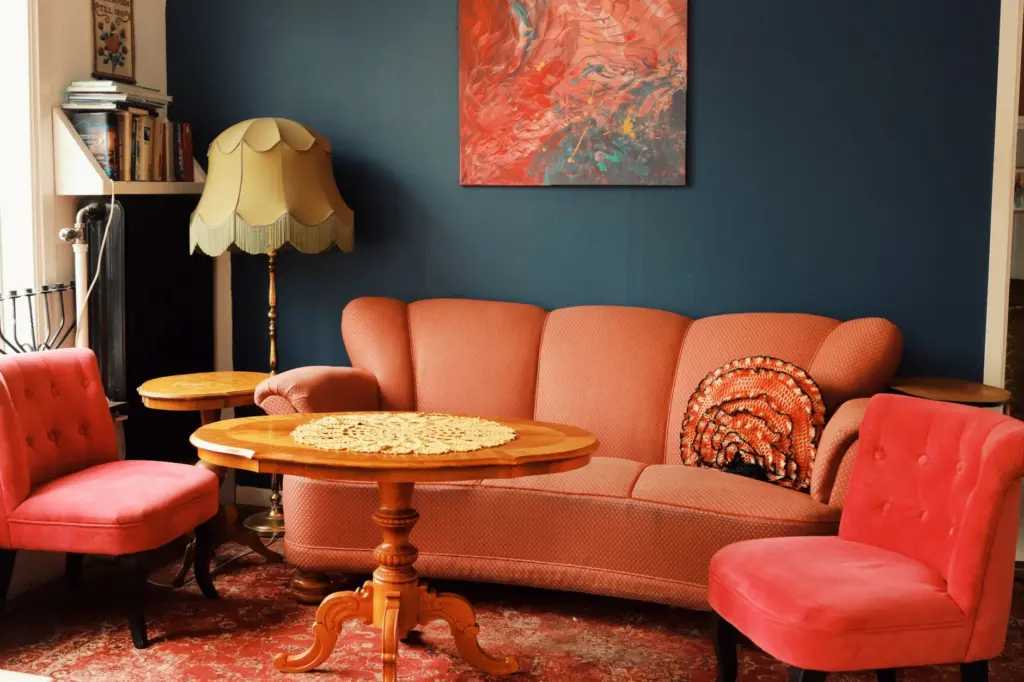
Texture is how a dark room gets warm, because it gives light something to catch. Benjamin Moore recommends pairing moody colors with rich textures like velvet or dark wood to make spaces feel enveloping and intimate. McGee & Co. adds a balancing rule: contrast opulent textures like velvet with warm, natural materials like wovens and wood.
Contrast does the rest. Living Large in a Small House suggests thinking in pairings, such as a sleek leather sofa against a plush wool rug, or a linen throw over a velvet cushion. An area rug is the easiest place to start, since a large wool rug adds softness underfoot and can carry pattern if the walls stay plain.
Wall art and personal pieces
Wall art works best when it is part of the layers instead of an afterthought. McGee & Co. suggests personalizing the room by layering artwork and décor into cabinets and built-ins, which keeps displays inside the room’s structure instead of spreading them evenly across bare walls. If you have no built-ins, a framed piece above the sofa lit by a picture light borrows the accent layer from the lighting section.
Keeping a dark room from feeling small
A dark room stays open when light is bounced around and the palette is disciplined. Position a large mirror opposite a window, which, according to Living Large in a Small House, maximizes whatever natural light you do have. In a smaller room, the same source calls sticking to a tight monochromatic palette while varying texture a particularly powerful approach. The walls, sofa and rug share a color family, and texture creates the separation between them.
Dark colors work with a small footprint instead of against it. Benjamin Moore’s point about depth means walls can visually recede, and the finish on the wall matters too, as the FAQ below explains. If your next project is a compact bedroom rather than a living room, the same palette and lighting logic carries over; how to decorate a small bedroom shows how to apply it at that scale.
Moody rooms also sit comfortably beside raw, honest materials. For a different take on cozy depth, see Modern Industrial Interior Design: How To Create Raw, Cozy, And Timeless Spaces In 2026.
Frequently asked questions
Do the walls have to be dark for a moody look?
No. Living Large in a Small House notes that you don’t need dark walls to get a moody feel, and that a lighter palette can still feel atmospheric with layered textures and candles.
Which paint finish suits a deep wall color?
Living Large in a Small House suggests a matte or eggshell finish on the walls with semi-gloss trim in the same hue, so the variation in sheen adds depth within a single color.
Can a bold pattern work in a small moody room?
Yes. The same source says the smallness of a room contains and amplifies a bold dark floral wallpaper, and recommends a large-scale pattern on an upholstered sofa or a dramatic area rug for an easier commitment.