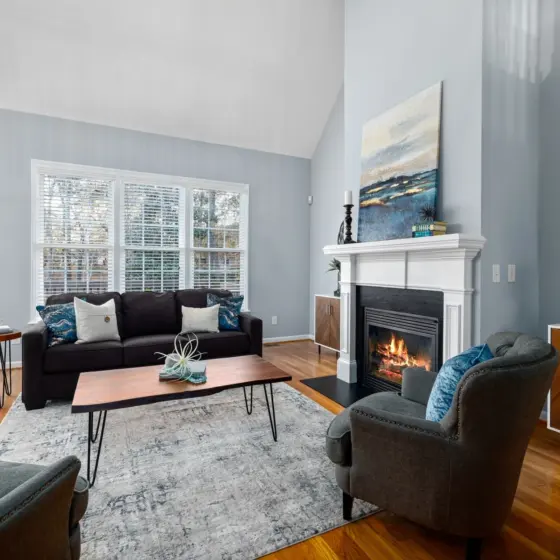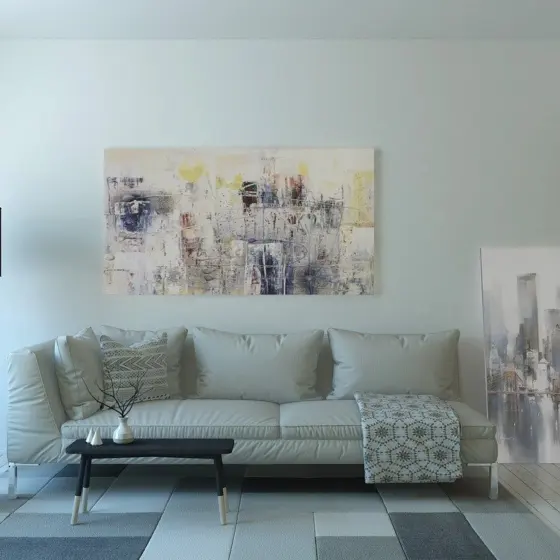
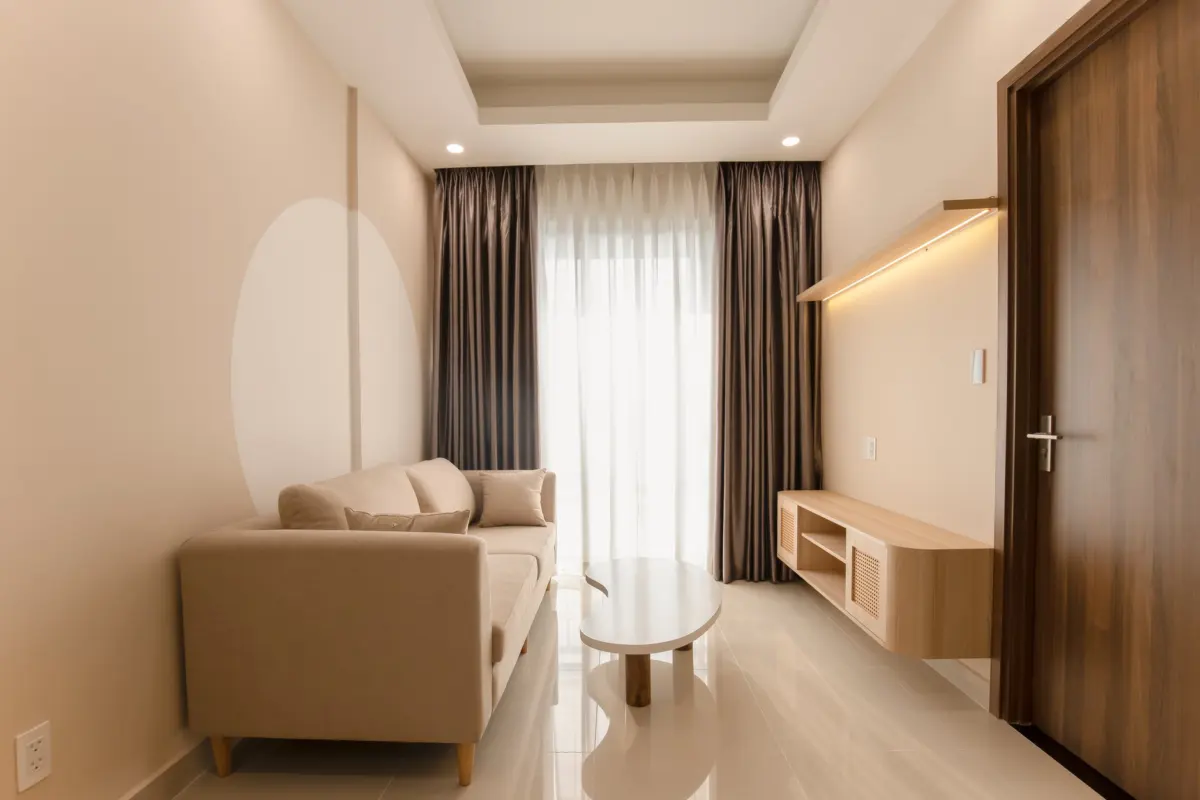
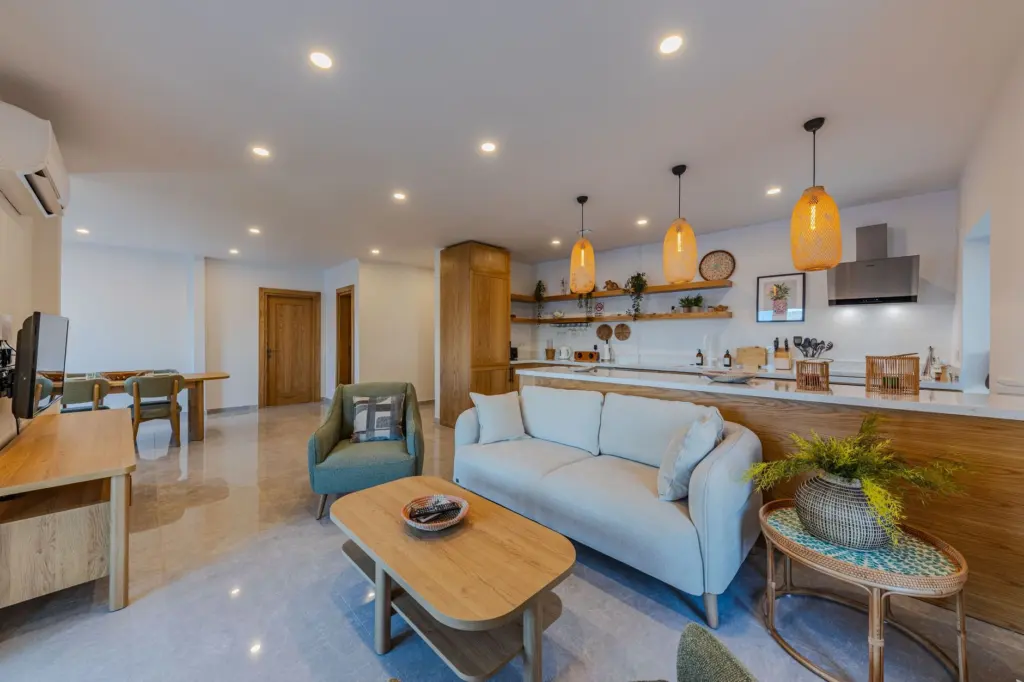
A warm minimalist living room keeps the open, clean, uncluttered feel of minimalism and adds softness through warm neutrals, natural textures and layered light. Its main condition is restraint: warmth should come from a few well-chosen materials, not from more objects.
For the wider logic of balance, proportion and layout, start with our interior design basics for beginners. This guide applies that thinking to one room and one question: what makes minimalism feel warm?
How minimalism becomes warm
Designer By Popov describes the aim of its warm minimalist living room project as making the space feel open, clean, uncluttered, intentional and comfortable. The last word matters. Warm minimalism does not loosen the discipline of minimalism. It adds a layer of inviting elements to the same core principles, a point WPL Design makes when it calls the result more livable and welcoming.
The mechanism is contrast. A minimal room relies on a small number of hard, clean surfaces, and By Popov’s project notes that adding softness with décor will offset the harder materials. So the useful question is not how much to remove but where the softness should come from. Colour, texture and light are the three places to look, and each is easier to control than the number of objects on display.
This also tells you when a room is not yet warm. If the palette is correct but every surface is hard, shiny or evenly lit, adding objects will not help. Change the material or the light instead.
Which colors work: the neutral palette
A neutral palette is the foundation, and the warm versions differ from cold ones in undertone. WPL Design recommends warm whites, beiges and earthy tones. Spacejoy points to softer, creamier shades such as ivory, greige and pale beige. Both describe a base in which nothing competes with the furniture and textiles.
| Role | Colors that suit it | Planning use |
|---|---|---|
| Wall and large-surface base | Warm whites, ivory, pale beige, greige | Use for the largest areas so the room reads calm and creamy rather than stark. |
| Grounding earth tones | Beiges and earthy tones, including a terracotta-toned rug | Bring in through a rug or one large textile so the base does not feel flat. |
| Soft accents | Dusty rose, sage green, mustard yellow | Keep to small, muted touches such as a cushion or a ceramic piece. |
| Deeper accents | Olive, rust, dusty pink, navy | Spacejoy says to use these as accents, not the main event. |
Palette ideas come from WPL Design’s warm minimalism guide and Spacejoy’s warm minimalist décor guide.
WPL Design gives one concrete combination to copy: warm white walls, linen-colored curtains and a terracotta-toned area rug. It works because the walls and curtains stay quiet while the rug supplies the single warm note. If you cannot decide between accent colours, choose one family from the table and repeat it, rather than sampling from every row.
Materials and texture
Texture is how a restrained room gets warmth without adding objects. Spacejoy’s list of natural materials is the most complete starting point: wool, cotton, linen, jute, rattan, light wood and matte ceramics. WPL Design suggests layering wool, linen, wood and stone for depth. Both lists favour matte, natural surfaces over polished ones.
Wool and linen
Wool and linen do most of the work in a warm minimalist living room. Spacejoy suggests a chunky knit throw, a wool rug and linen drapes, and By Popov’s project used a custom, chunky knit woven wool rug to bring texture and ground the furniture. A rug is the best place to start because it is large enough to change the feel of the whole room yet counts as only one item.
Oak and other woods
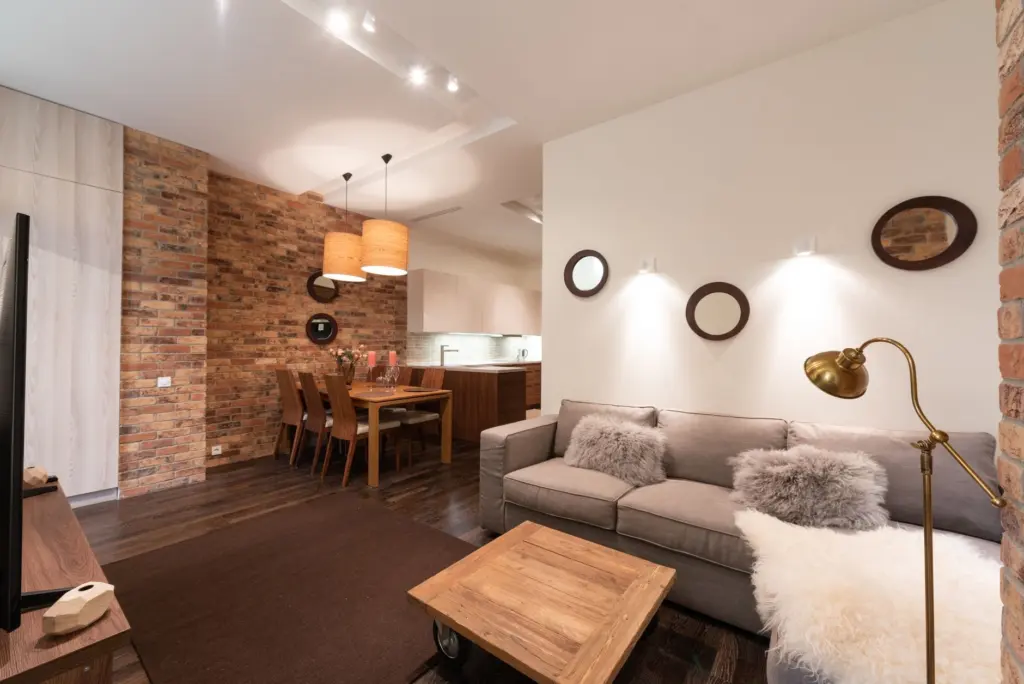
Wood balances clean lines and neutral shades. Spacejoy specifically recommends medium to light finishes and names an oak sideboard, a mid-century coffee table and simple wooden picture frames as examples. This suits a room that is mostly pale: a light oak piece adds warmth without the heaviness of a dark finish. A single sideboard in oak can carry the wood element for the whole room.
The sofa
The sofa is the largest soft surface, so its fabric sets the tone. By Popov’s project used a large, custom velvet sofa to bring lush richness, contrast and comfort. That is one project’s choice, not a rule. What it shows is that the sofa can be the single plush element in an otherwise plain room. Pair a rich upholstery fabric with plain, quiet surroundings rather than with several other statement pieces.
For ideas on combining fabrics, the book Living With Pattern is described by Little Gold Pixel as showing how to mix and match textures, styles and colors. In a minimal room, apply that mix to texture rather than to pattern.
Lighting that finishes the room
Light is the quickest way to undo a cold room. Spacejoy’s advice is to skip harsh overhead lighting and use soft, layered lighting instead. Its suggested combination is floor lamps, sconces and table lamps with warm-toned bulbs, which adds dimension and coziness.
A table lamp is the simplest layer to add, especially beside the sofa or on a sideboard, because it needs no wiring and sits low where the eye rests in the evening. Choose shades in soft fabric or frosted glass for a diffused glow. A bare, bright bulb near eye level will undermine an otherwise soft room. Layering lamps at different heights also means the ceiling fixture can stay off for much of the evening.
Keeping the room uncluttered
Warmth and clutter are separate problems, and the research points to fewer, better things. Spacejoy says carefully curated accessories can infuse warmth and personality, and that texture adds warmth without clutter. In practice, a throw, a wool rug and linen drapes give a room more comfort than a shelf of small decorative objects. By Popov’s project also credits minimal furniture and a calm, neutral color palette with creating cohesiveness throughout the house.
A working order
Order matters because early choices constrain later ones. Work through the room in this sequence:
- Fix the palette. Every later purchase is judged against the base colours and a short accent list.
- Choose the large pieces. Select the sofa and one wood piece, such as an oak sideboard, since they take the most space.
- Add soft layers. Introduce the rug, throw and drapes, and stop when the room feels comfortable.
- Set the lighting. Put warm-toned lamps where people sit.
- Edit last. Keep only accessories you would choose again, because curation is what separates warm minimalism from simply having less.
If you want a moodier take on a restrained, textured room, compare this approach with Modern Dark Academia Bedroom: How To Create a Moody, Timeless Sanctuary In 2026. For a harder, rawer treatment of the same less-is-more idea, see Industrial-Style Kitchen: How To Create A Raw, Functional Space In 2026.
Frequently asked questions
Where should the sofa go in a warm minimalist living room?
WPL Design gives placing a sofa slightly off-center as an example of how to create visual interest in a simple layout. Treat it as an option for adding life to a plain arrangement, not a requirement.
Do plants count as clutter?
Not when they are chosen carefully. Spacejoy recommends sculptural plants such as a snake plant, rubber tree or fiddle-leaf fig, and suggests one or two, since they add freshness without visual clutter.
Can I still have privacy without heavy curtains?
Yes. By Popov’s project used sheer, full-length window coverings, which give privacy without enclosing the space or dampening the light.
Which coffee table books suit a neutral living room?
Books in neutral tones. Blogger Brittany Krystle’s roundup of neutral coffee table books lists black and white, tans and beiges, and greys as colours that are hard to get wrong.