Japandi living room blends Japanese restraint and Scandinavian comfort. The japandi living room favors clean lines, natural materials, and few objects. It aims to make spaces calm and useful. Designers place function first and remove excess. The result feels warm, simple, and quiet. Readers will learn key rules and practical steps to build a japandi living room they enjoy.
Key Takeaways
- A japandi living room blends Japanese minimalism and Scandinavian comfort using clean lines, natural materials, and functional layouts.
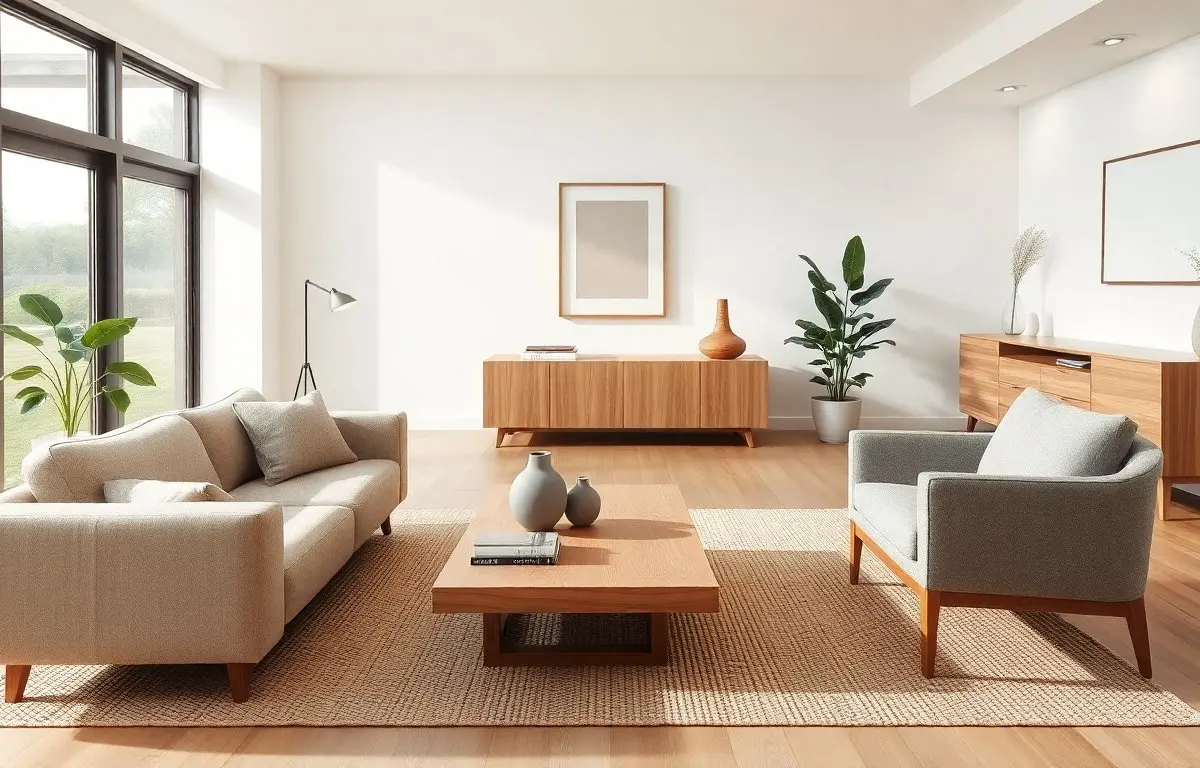
- Prioritize simple layouts and low-profile furniture made from quality woods like oak or walnut to keep your japandi living room calm and open.
- Use a neutral color palette with warm accents such as muted greens or navy to create a balanced, soothing atmosphere.
- Layer lighting with ambient, task, and accent sources featuring warm bulbs and dimmers to enhance mood and highlight textures.
- Incorporate purposeful accessories sparingly, focusing on a single focal piece and natural elements like plants to add life and maintain simplicity.
Core Principles Of Japandi Design
Japandi design rests on three clear rules. First, keep layouts simple. Second, use quality materials. Third, choose utility over ornament. The japandi living room uses low profiles and open sightlines. The style values craft and small details. It places a single focal piece rather than many items. It mixes matte woods with soft textiles. It balances empty space with purposeful objects. It avoids visual clutter and keeps maintenance simple.
Layout, Scale, And Furniture Choices
They arrange furniture to support daily routines. They place seating near natural light and conversation paths. The japandi living room favors compact sofas and one substantial armchair. They avoid oversized pieces that block flow. They select pieces that sit low to the ground and read as calm. They leave room for movement and a sense of air. They keep storage integrated and hidden. This approach keeps the room tidy and functional.
Ideal Furniture Materials And Shapes
They pick natural woods like oak, ash, and walnut. They choose simple shapes: straight legs, flat planes, and soft curves. The japandi living room uses textiles in linen, cotton, and wool. They favor muted patterns or solid tones. They select pieces with visible joinery or subtle hardware. They prefer multifunctional furniture, such as benches with storage. They test scale by measuring sightlines and walking paths before buying.
Color Palette, Textures, And Natural Elements
They build palettes from neutral bases and warm accents. The japandi living room pairs off-white, soft gray, and warm beige. They add muted greens or deep navy as small accents. They layer textures with woven rugs, wood grain, and matte ceramics. They include plants to add life and air quality. They use natural light to show texture and hide flaws. They balance warm hues with cool neutrals for calm contrast.
Lighting, Accessories, And Styling Tips
They layer light in three parts: ambient, task, and accent. The japandi living room uses warm bulbs and dimmers to set mood. They pick lamps with simple silhouettes and natural finishes. They keep accessories few and meaningful. They display one artwork or a set of ceramics rather than many objects. They choose rugs that define zones without dominating. They rotate items seasonally to refresh the room without buying more.