How often to season cast iron matters for cooking and pan life. The writer answers this question with clear rules. The article shows timelines, signs, and simple steps. Readers learn when to add oil, when to maintain, and when to strip and restart.
Key Takeaways
- Season cast iron when its performance drops, such as when food sticks or the surface looks dull or rusty.
- Lightly oil and heat your pan after each use to maintain the seasoning and prevent rust.
- Full seasoning with a thin oil coat and high-heat baking is recommended every few months for regular users.
- Recognize signs like matte surfaces, rust spots, or sticky residue as indicators you need to re-season your cast iron.
- Proper cleaning, drying, and light oiling after use extend the seasoning life between full treatments.
- If rust or flaking occurs, strip the pan to bare metal and rebuild seasoning layers to restore its nonstick surface.
Why Season Cast Iron? Benefits And What Seasoning Actually Does
Seasoning creates a thin polymerized oil layer on cast iron. It seals tiny pores and creates a nonstick surface. It also slows rust and improves heat transfer. Chefs and home cooks value cast iron for even heat and durability. Regular seasoning turns a rough pan into a smooth pan that releases food. Seasoning also adds a mild protective barrier that keeps moisture away. Over time, repeated seasoning builds stronger layers. That layer makes cookware easier to clean and more forgiving with high heat.
How Often To Season Cast Iron — The Simple Rule Of Thumb
The simple rule to answer how often to season cast iron is: season when performance drops. If the pan sticks, looks dull, or shows bare metal, add a light seasoning. If the pan still slides food and resists rust, skip a full seasoning. Light oiling after each use helps. A full seasoning cycle works well every few months for regular use. Rarely used pans can go longer between full seasons, but they benefit from a thin oil coat before storage. The goal is to maintain the protective layer without overbuilding it.
Frequency By Use: Daily, Weekly, Monthly, Or Yearly Schedules
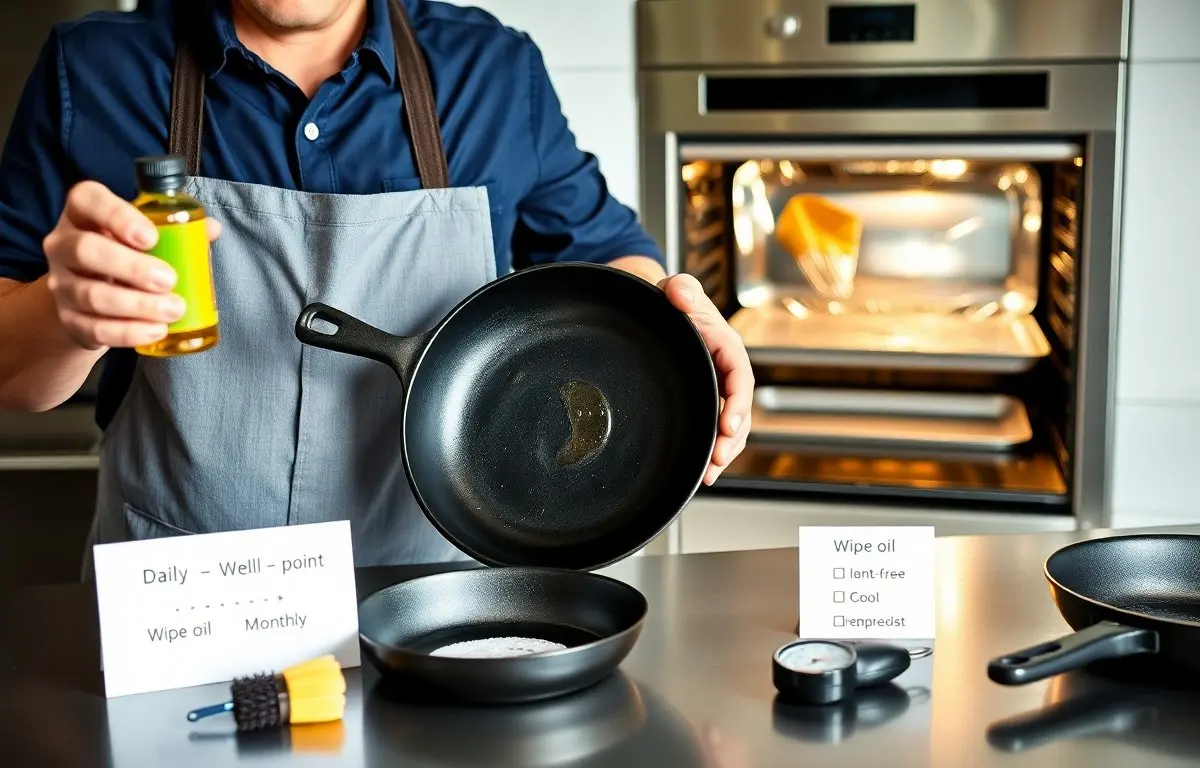
Daily cooks should wipe hot pans with oil after cool down. This prevents food build-up and keeps the layer active. Weekly users should add a light oil and heat it briefly on the stovetop or in the oven. Monthly cooks should do one full seasoning pass: thin oil layer, heat to polymerize, cool, repeat once. Infrequent users should oil before storage and inspect for rust every few months. Heavy use, like frying often, may need a full seasoning every one to two months. The schedule lets users match care to use.
Common Signs You Need To Re‑Season (And How To Spot Them Quickly)
Look for these signs to know how often to season cast iron. Food sticks more than usual. The surface looks matte or dry. Small rust spots appear. Flaky or uneven coating shows bare metal. The pan smells burnt after cleaning. If any sign appears, clean the pan and apply a thin oil layer, then heat until the oil polymerizes. Quick checks after washing help: dry the pan, rub a drop of oil, and see if it beads or soaks in. Beads mean a strong layer: soaking means it needs seasoning.
How To Season Cast Iron Correctly: A Step‑By‑Step Routine
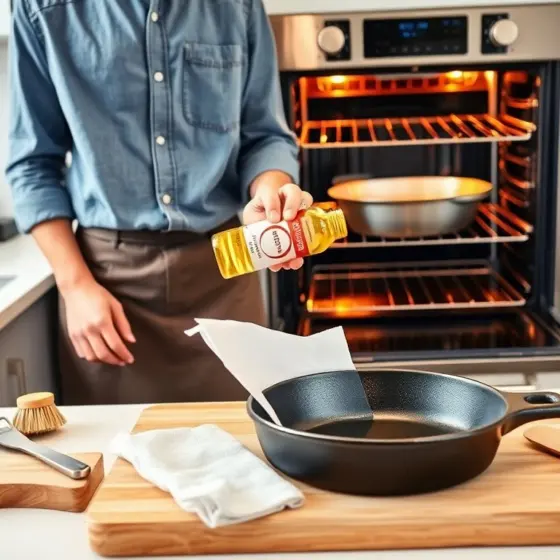
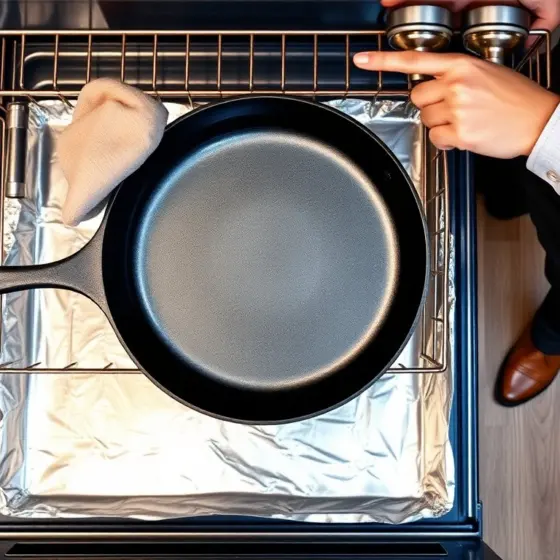
Clean the pan with hot water and a stiff brush. Dry the pan completely with a towel and short heat on the stove. Apply a thin, even coat of high smoke-point oil, such as flaxseed or grapeseed. Wipe away excess until the surface looks dry. Place the pan upside down in an oven at 450–500°F with foil below to catch drips. Bake for one hour, then turn off the oven and let the pan cool inside. Repeat one to three times for a new or stripped pan. Test with a drop of water to confirm solid beading.
Maintenance Tips To Extend Your Seasoning Between Full Re‑Seasons
After each use, clean the pan while it is warm. Use hot water and a brush: avoid soap if the layer is strong. Dry the pan on the stove for a minute to remove moisture. Rub a light coat of oil on the cooking surface while the pan is warm. Store the pan in a dry place with a paper towel between stacked pieces. Avoid acidic long cooks in newly seasoned pans: acids can wear a fresh layer. If residue builds, heat the pan and wipe with oil to refresh the surface quickly.
Troubleshooting: Rust, Sticky Surfaces, Flaking, And When To Strip And Start Over
Rust needs immediate action. Scrub rust with steel wool to bare metal, rinse, dry, and re‑season. Sticky or gummy surfaces come from excess oil. Clean with hot water and a scraper, then bake at 500°F to harden any thin patches. Flaking means old layers failed. Strip the pan to bare metal using oven cleaner, lye, or mechanical abrasion. After stripping, follow the step‑by‑step seasoning routine and build multiple thin layers. If damage persists after re‑seasoning, inspect for pitting. Replace only if structural damage affects safety.