Vintage wrought iron patio furniture draws attention for its weight, detail, and longevity. It offers visual interest and strong performance on modern patios. Buyers value original finishes, cast details, and simple repairs. This article explains why the pieces still work, how to tell originals from reproductions, basic restoration steps, and where to buy without overpaying.
Key Takeaways
- Vintage wrought iron patio furniture remains durable and stylish for modern patios due to its heavy, solid metal and versatile design range.
- Authentic vintage pieces can be identified by checking for age signs like patina, hand-forged joints, maker stamps, and thicker material compared to modern reproductions.
- Key styles like Victorian, Midcentury, and Art Deco each have distinct motifs and construction details that help determine a piece’s era and authenticity.
- Regular restoration and maintenance, including cleaning, touch-up paint, and rust repair, extend the life and appearance of vintage wrought iron furniture.
- Buying vintage wrought iron furniture is best done at estate sales, flea markets, or specialty dealers, with attention to prices, condition, and restoration costs.
- Placement in partial shade and adding cushions improve comfort, while well-maintained vintage furniture often retains better resale value than new sets.
Why Vintage Wrought Iron Still Works For Modern Patios
Vintage wrought iron patio furniture fits modern patios for three clear reasons. First, it resists wind and wear because the metal is heavy and solid. Second, it offers design range from ornate to minimalist so it matches many decor styles. Third, owners can repair and refinish pieces with basic tools, which lowers lifetime cost. Buyers should note that iron holds heat in direct sun, so placing pieces in partial shade improves comfort. Cushions add softness and protect the finish. Finally, well-maintained vintage pieces often hold resale value better than cheap new sets.
How To Identify Authentic Vintage Pieces
Collectors and casual buyers can check a few clear signs to confirm authenticity. Age shows in paint layers, wear at contact points, and patina in crevices. Weld marks and hand-forged joints suggest older construction. Look for maker stamps, model numbers, or country marks on undersides and frames. Joiner fits and rivets often differ between eras. Finally, match material thickness: vintage iron typically feels heavier and thicker than modern cast aluminum or pressed steel.
Key Markings, Construction Details, And Materials To Look For
Seek stamped maker names under seats and on frame crossbars. Check bolt heads for square or slotted shapes: older bolts often show hand-finished slots. Inspect joints for forge marks or peen hammering that signal hand work. Measure tube and bar thickness: thicker sections point to genuine wrought iron. Note the presence of wrought weld beads or rivets rather than machine seams. Confirm material by tapping: iron gives a dull, low tone while aluminum rings higher. Finally, document any labels with photos before you buy.
Recognizing Styles And Eras (Victorian, Midcentury, Art Deco)
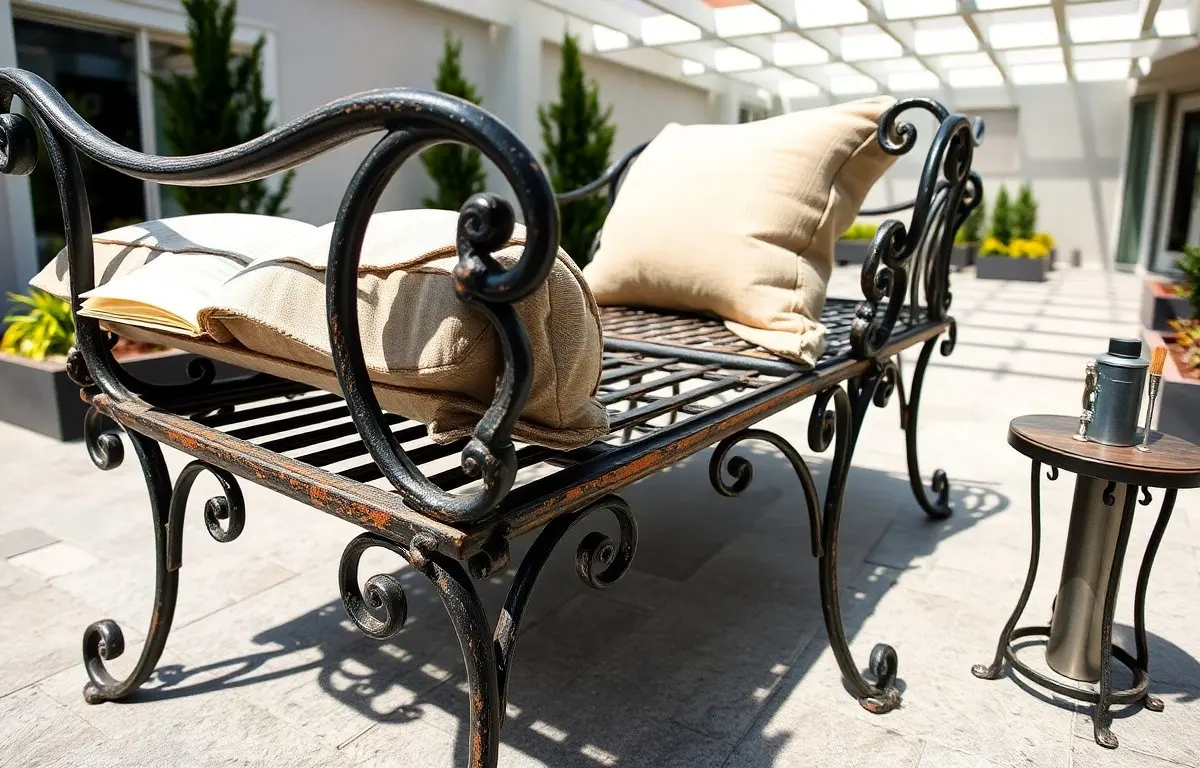
Victorian pieces show heavy ornament, scrollwork, and floral motifs. Midcentury designs favor clean lines, geometric cutouts, and lighter silhouettes. Art Deco sets use stepped forms, sunburst patterns, and bold symmetry. Compare details like leg shape, arm curves, and seat designs to dated catalogs or auction listings. Photographs of known makers from the era help confirm style. Buyers can narrow age by pairing visual cues with construction details and markings.
Restoring And Maintaining Wrought Iron Furniture
Restoration and maintenance extend life and improve looks. Regular cleaning prevents dirt build-up and surface corrosion. Light washing with mild soap and a soft brush clears debris. Apply touch-up paint to chips and keep metal sealed with outdoor-grade paint or clear sealer. For joints, tighten fasteners and add stainless hardware if replacements are needed. Store cushions dry and cover frames during long wet seasons. Inspect furniture twice a year for rust spots and loose welds.
Essential Tools, Safety, And Step-By-Step Rust Repair
Prepare a workspace and wear gloves, eye protection, and a dust mask. Gather a wire brush, sandpaper, rust converter, primer, outdoor metal paint, and rags. Step 1: Remove cushions and loose parts. Step 2: Wire-brush all rust to expose clean metal. Step 3: Sand pitted areas to smooth edges. Step 4: Apply rust converter to stubborn patches and let it dry. Step 5: Prime bare metal with a metal primer. Step 6: Paint two thin coats of outdoor metal paint, drying between coats. Step 7: Reassemble hardware using stainless bolts if possible.
Where To Buy Vintage Wrought Iron And What To Pay
Buyers can find vintage wrought iron patio furniture at estate sales, flea markets, online auctions, and specialty dealers. Estate sales often yield fair prices for single pieces. Flea markets let buyers inspect items in person and negotiate. Online auctions offer variety but require shipping checks and condition photos. Specialty dealers provide restored pieces with higher prices and guarantees. Price depends on maker, condition, rarity, and size. Expect to pay from moderate sums for common sets to high sums for designer makers. Always factor restoration costs and shipping when making an offer.